
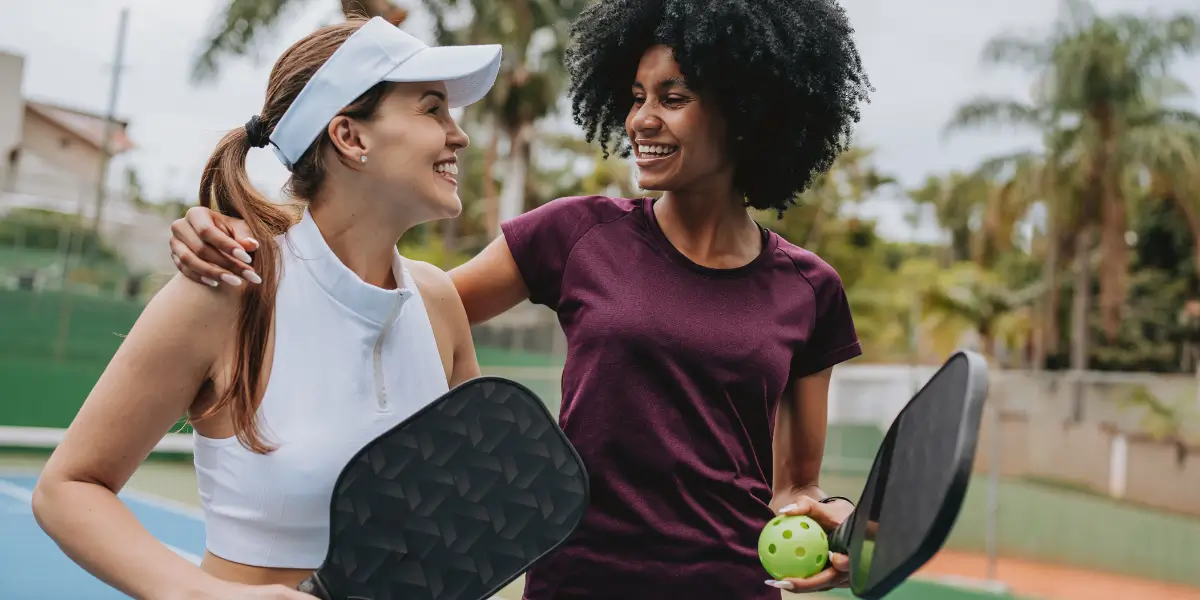
Many people assume pickleball is always played as doubles, but that’s not the case. While doubles is popular, pickleball can also be played as singles, offering a completely different experience and strategy.
Singles matches test your agility, footwork, and precision, whereas doubles focus more on teamwork and court coverage. Understanding the difference is crucial for players of all levels because your approach, positioning, and tactics change depending on the format.
This guide breaks down the realities of singles and doubles play, explains rule variations, and highlights why neither format is inherently better, it’s all about your goals, style, and preference.
Is Pickleball Always Doubles? (Exploring Singles Play)
No, pickleball is not always played as doubles. While many casual games involve four players, singles is a completely valid format and offers a very different experience.
In singles, you are responsible for covering the entire court on your own. This means you must constantly move, anticipate your opponent’s shots, and carefully position yourself to reach every ball.
Unlike doubles, where a partner can cover part of the court, singles exposes every gap in your movement and every weak shot, making strategic thinking and anticipation much more important.
Beginners may find singles challenging at first because it requires more stamina and focus, but practicing this format gradually builds endurance, improves decision-making, and strengthens your overall game.
Singles vs Doubles in Pickleball
Singles and doubles share the same court and scoring, but the approach and strategy differ. In singles, the focus is on precision and endurance, as each player must handle every shot alone. The game tends to be more tactical, with players aiming to create openings and control rallies.
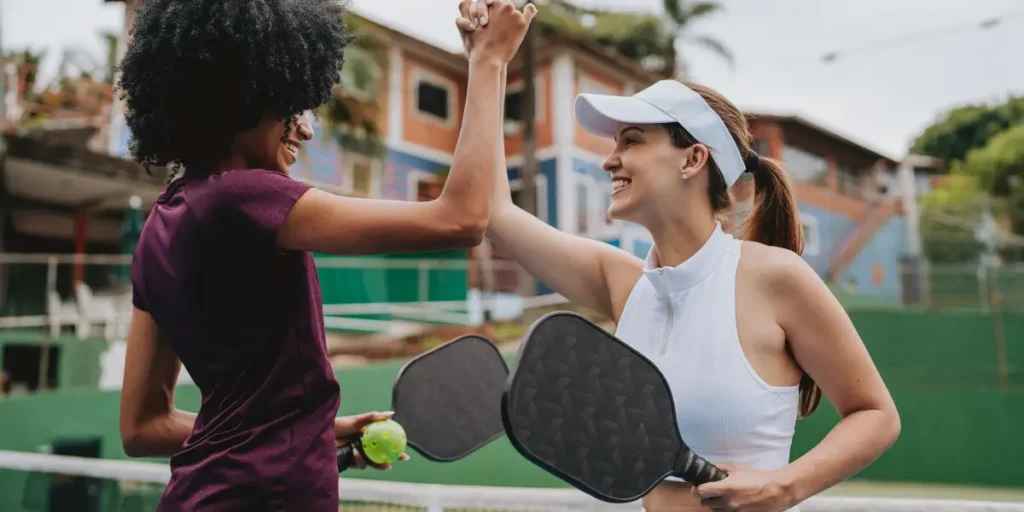
Doubles, on the other hand, emphasizes teamwork and coordination. Partners can cover for each other, set up angles, and plan coordinated shots. While the core rules remain the same, doubles allows for strategies that are not possible in singles, making communication and positioning essential.
Recognizing these differences helps players adapt their gameplay and choose the format that suits their skill level or training goal.
How to Play Singles in Pickleball
In singles, success depends on smart shot selection and consistent execution. Focus on placing the ball to force your opponent out of position, aiming for corners or deep shots that limit their options. Mixing your shots, lobs, drop shots, and angled drives keeps the game unpredictable and puts pressure on your opponent.
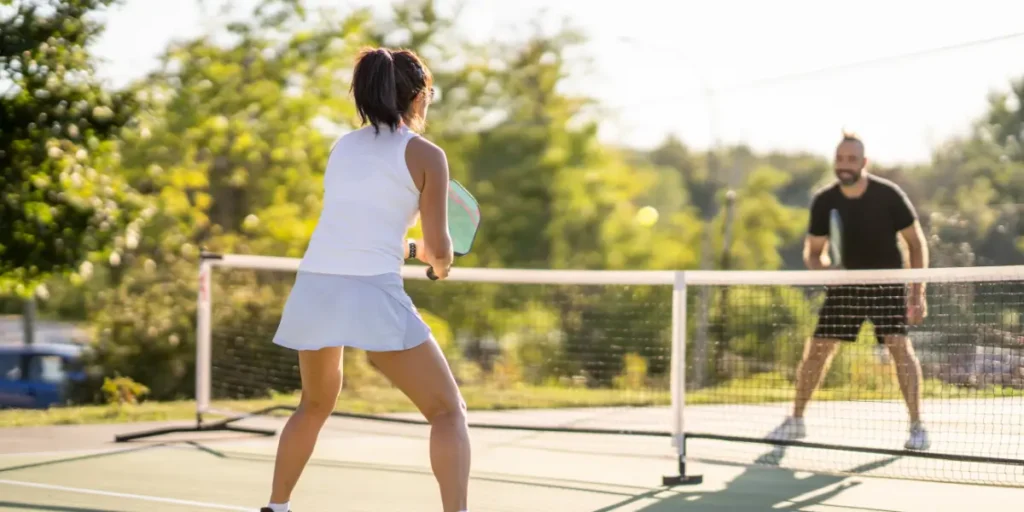
Serving strategy is also crucial. Use serves to gain a tactical advantage, either by targeting weak spots or varying speed and placement to disrupt rhythm. During rallies, prioritize short, controlled movements and recover quickly after each shot to maintain readiness for the next exchange.
Mental focus plays a key role in singles. Stay patient, watch your opponent’s patterns, and choose the right moment to attack. Practicing these tactics consistently improves accuracy, anticipation, and overall point control, making singles play both challenging and rewarding.
Check out our detailed guide on how to play pickleball singles, where we cover everything you need to know.
Rules That Change Between Singles and Doubles
Although the basic rules of pickleball apply to both singles and doubles, there are key differences that affect gameplay and strategy.
In singles, each player serves from the right-hand side when the score is even and from the left when odd, similar to doubles, but you are solely responsible for the entire court. This means every fault, shot placement, and point is your own responsibility, requiring careful planning and precision.
In doubles, serving alternates between partners, and team positioning becomes critical. Partners can coordinate movements, cover angles together, and execute poaching strategies that are impossible in singles.
While the scoring system remains identical, doubles matches often feature longer rallies and faster exchanges, demanding communication, coordination, and quick reflexes.
Advantages of Playing Pickleball Doubles
Playing doubles offers several benefits, especially for beginners and recreational players.
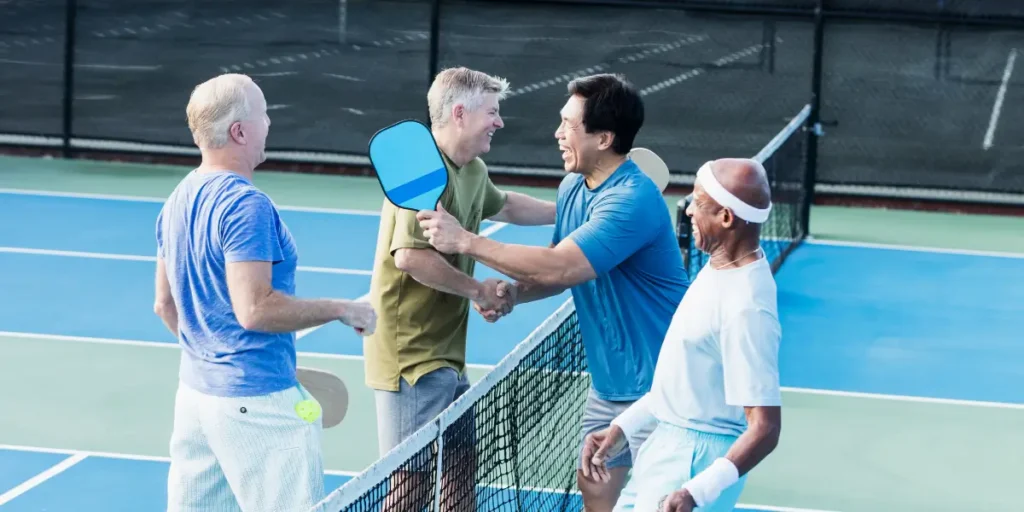
First, having a partner reduces the area you need to cover, making it easier to focus on shot accuracy and learning game strategy. Teamwork allows players to support each other, cover weak spots, and execute coordinated plays like poaching or angled shots.
Doubles also creates faster-paced rallies, which can make games more exciting and fun. Beyond the physical advantages, doubles matches foster communication, coordination, and social interaction, making it an enjoyable format for casual play or local tournaments.
Advantages of Playing Pickleball Singles
Singles play is an excellent way to build endurance, agility, and mental focus. With no partner to rely on, you are responsible for every shot, which improves decision-making, anticipation, and precision.
Singles challenge your ability to cover the entire court, helping to develop footwork and reflexes that transfer well to doubles matches. The format also encourages strategic thinking, as players must carefully choose when to attack, defend, or place shots to create openings.
Practicing singles regularly strengthens your overall game and prepares you for a wide range of competitive situations.
Popular Pickleball Formats and Tournaments
Pickleball is played in several formats, each offering unique challenges and experiences.
Doubles is the most common format in recreational leagues and local tournaments because it allows players to share court coverage and enjoy faster-paced rallies with a partner. It’s ideal for beginners who are still developing movement and shot accuracy.
Singles competitions, although less common, provide a more intense and physically demanding game. Players must cover the entire court alone, which tests stamina, strategy, and precision. Singles matches are often used in competitive tournaments to highlight individual skill and mental focus.
Mixed doubles, which combines male and female players, is another popular format, adding strategic depth and dynamic team play. Recreational players often rotate between formats to develop different skills, gain experience, and enjoy variety.
Understanding the different formats helps you to choose the style that matches your goals, whether for fun, practice, or competition.
FAQs
Yes, beginners can play singles, but it is generally more challenging because you are responsible for covering the entire court. Starting with doubles often helps new players focus on technique and court positioning before moving into singles.
Yes, especially in recreational and social settings, doubles matches are preferred. Teamwork allows players to share court coverage, making games more accessible, faster-paced, and enjoyable for a wider range of skill levels.
Absolutely. Many players alternate between singles and doubles to practice different skills and maintain variety. Switching formats helps build overall gameplay versatility and keeps practice sessions more engaging.
Conclusion
Pickleball is not limited to doubles, both singles and doubles offer unique challenges and benefits. Singles tests your stamina, agility, and strategic thinking, as every shot is your responsibility, while doubles emphasizes teamwork, coordination, and faster-paced rallies.
Understanding the differences in rules, positioning, and tactics allows players to adapt their gameplay effectively and enjoy both formats. Whether you prefer the social and cooperative nature of doubles or the endurance and precision required in singles, practicing both can significantly enhance your overall skills.
Exploring each style ensures a versatile, engaging, and rewarding pickleball experience for players of all levels.