
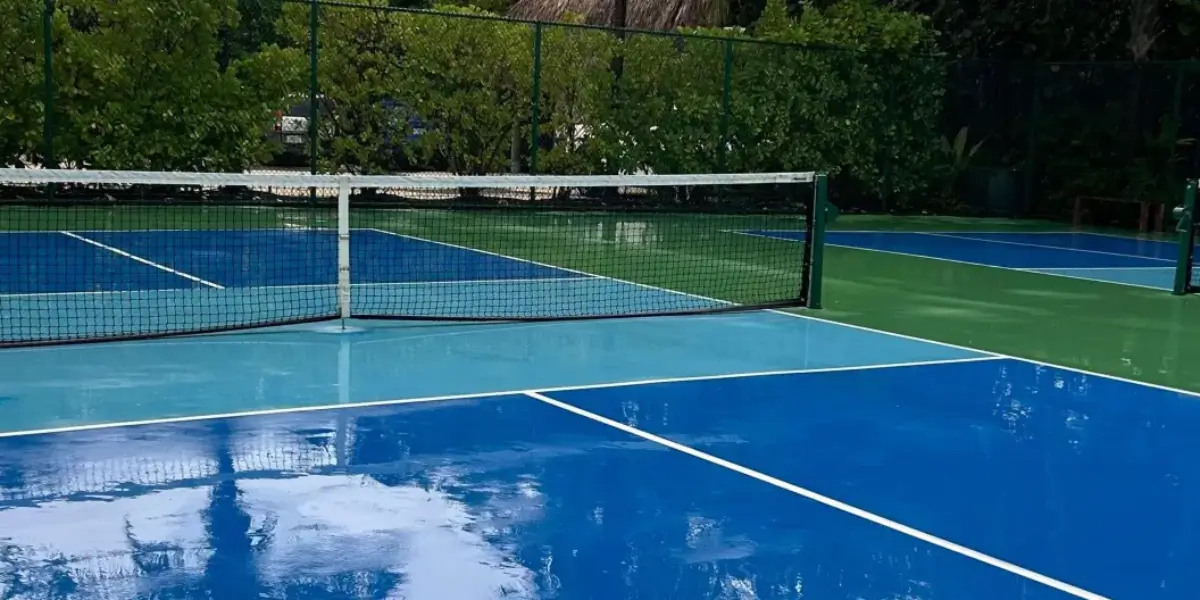
Can you play pickleball in the rain or on a wet court is a question many players face the moment rain starts falling or when the court is left damp after a storm. This decision is not only about finishing a game.
It is about maintaining control and avoiding unnecessary injuries. Rain and leftover moisture create unpredictable court conditions that affect foot grip, ball response, and overall balance. A court may appear playable while still remaining slick in key areas.
This guide explains what really happens on a rain-soaked and wet pickleball court,s and when playing may still be possible. It also helps you recognize the exact moment when stopping becomes the smartest choice.
Can You Play Pickleball in the Rain or on a Wet Court
Playing pickleball in the rain is not recommended. When rain is actively falling, the court surface becomes slippery very quickly. Shoe grip is reduced, and sudden movements become harder to control. The ball also feels heavier, and its bounce becomes unpredictable.
In these conditions, playing is not only risky but unnecessary because the chance of injury increases sharply. For this reason, pickleball should be avoided during active rain.
Playing on a Wet Court
A wet court after rain is a different situation. If the rain has stopped and the court feels only slightly damp, some players try to play short rallies. The problem is that wet courts rarely dry evenly. Certain areas may feel safe while others remain slick.
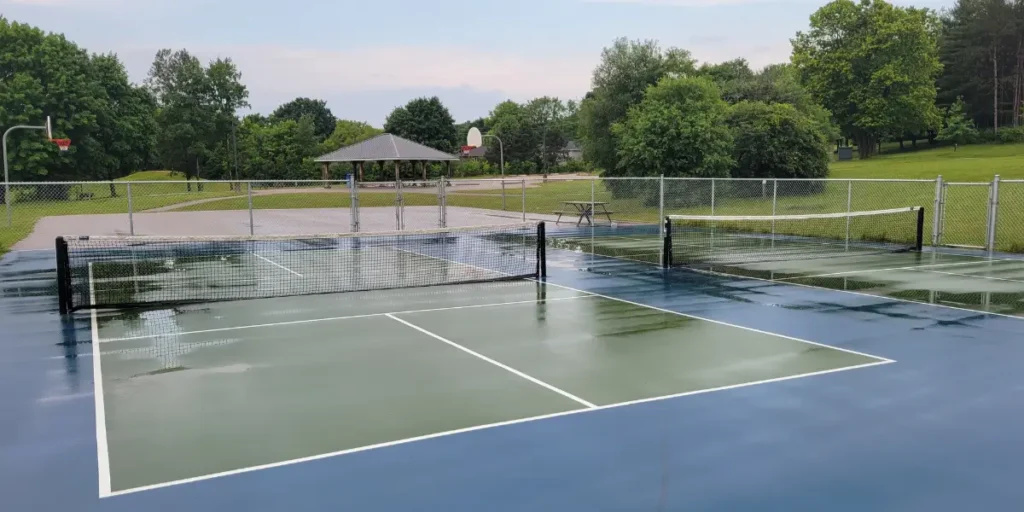
This sudden change in traction is the main cause of slips and falls. If there is visible water on the court or your shoes slide during warm-up, the surface is not safe for play.
The simplest rule is this. Playing in the rain is almost always unsafe. Playing on a wet court should only be considered when the surface feels fully stable. If you feel unsure at any point, it usually means the court is not ready yet.
Can You Play Pickleball in Light Rain or Drizzle?
In most cases, you should not play pickleball in light rain or drizzle. Even a small amount of rain quickly reduces shoe grip and affects balance. The court may feel playable at first, but it becomes unsafe within minutes.
Drizzle also creates uneven wet spots across the court. One step may feel stable while the next can slide. Because pickleball requires quick stops and fast direction changes, light rain still carries a high risk. The safest choice is to stop and wait until the court is fully dry.
Safety Risks of Playing on a Wet Pickleball Court
Playing pickleball on a wet court carries risks that are often underestimated. The biggest issue is loss of traction. When the surface is damp, your shoes cannot grip the court properly, which makes quick stops and lateral movement unstable.
Pickleball demands fast reactions and sudden changes in direction, and a wet surface removes that control.
Another risk comes from uneven moisture. Some areas dry faster while others stay slick. This inconsistency causes unexpected slips, especially near the kitchen line and baselines where players plant their feet. Falls on hard courts often lead to wrist, knee, or ankle injuries.
Wet conditions also affect confidence and reaction time. Players hesitate without realizing it, which increases the chance of awkward movement. Even skilled players are vulnerable because experience cannot overcome poor footing.
If the surface does not feel fully secure, the risk of injury becomes higher than the benefit of continuing play.
Safe Pickleball Drills to Practice on a Wet Court
Playing pickleball on a wet court should only be considered when the surface is slightly damp and not slippery. This is about controlled movement and awareness, not normal match play.
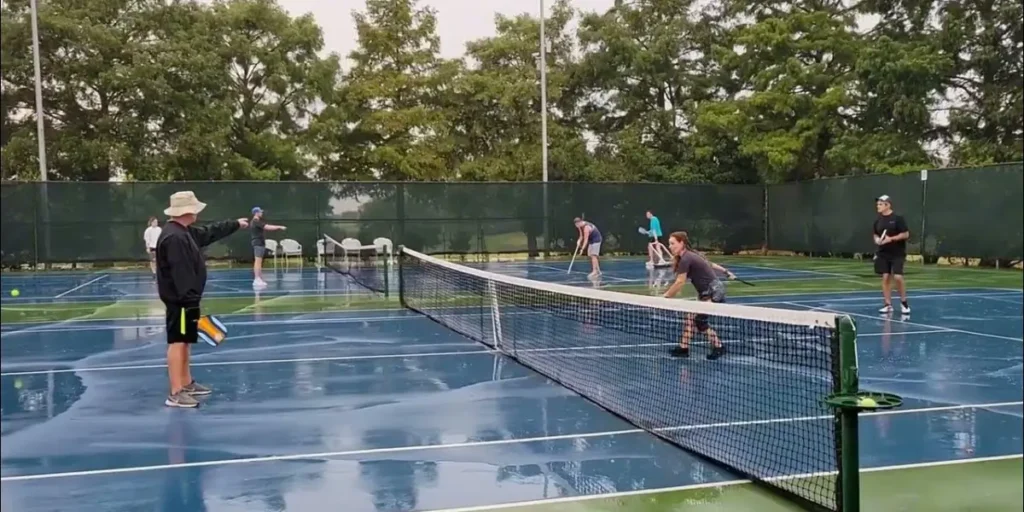
When the court is damp, slow your movement and avoid explosive starts or hard stops. Stay upright, take shorter steps, and keep side-to-side shuffles minimal. This helps reduce the risk of losing traction during sudden direction changes.
Instead of full games, focus on low-risk drills that limit aggressive movement. One useful drill is soft dink exchanges at the kitchen line, where both players keep the ball low and slow without rushing forward.
Another option is cross-court dinking, where you stay mostly planted and work on touch rather than speed. These drills keep your feet stable while still allowing meaningful practice.
You can also try standing volley drills at midcourt. Both players remain in one position and work on controlled volleys without stepping aggressively into shots. Groundstroke shadow swings without chasing the ball are another safe option. These drills help maintain rhythm without forcing quick stops or pivots.
Throughout any wet court session, keep checking your footing. Moisture can spread or return even if conditions felt safe a few minutes earlier. The moment the balance feels uncertain, the session should end.
Wet court play is not about pushing through conditions. It is about staying cautious, practicing control, and knowing when walking away is the smartest decision.
How Rain Affects Pickleball Equipment
Pickleball equipment reacts differently in wet conditions, and prolonged exposure to rain can also cause damage.
The ball is usually affected first. When it gets wet, it becomes heavier and loses its normal bounce. Over time, moisture can weaken the plastic, which shortens the ball’s lifespan and causes cracks to appear sooner.
Paddles can also suffer in rainy or damp conditions. Moisture on the handle reduces grip and makes control less reliable. Repeated exposure to water can affect the core and edge guard, especially if the paddle is not dried properly afterward.
Shoes are another concern. Wet courts wear down traction faster, and moisture can break down the sole material. When equipment is compromised, it not only affects performance but also increases the risk of mistakes and injuries on the court.
How to Dry a Pickleball Court
1. Check the Court Before Drying
Before doing anything, walk the court slowly and check where the water is sitting. Focus on the kitchen line baselines and sidelines because these areas stay wet longer. If there is standing water, the court needs active drying, not just time.
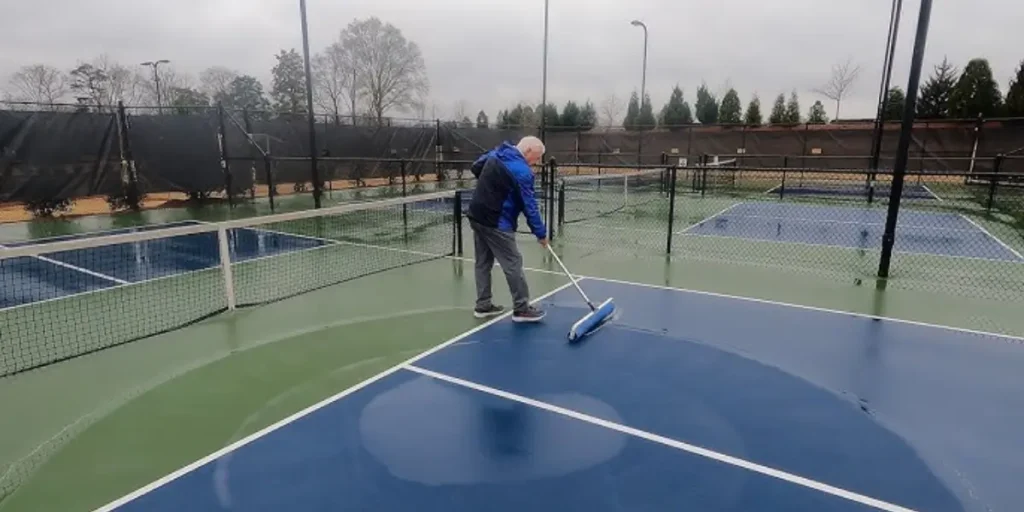
2. Use the Right Drying Tools
Towels, squeegees, rollers, or court dryers work best for removing surface water. Push water off the court instead of spreading it around. Start from the center and move outward so moisture does not collect again in low spots.
3. Drying the Court Using Leaves or Brooms
When proper tools are not available, dry leaves or a soft broom can also help. Large dry leaves can be used to gently push water toward the edges of the court. This works best for thin surface moisture, not deep puddles.
The key is to move water off the playing area instead of rubbing it into the surface. Avoid using wet or sharp objects because they can spread moisture or damage the court coating.
4. Test Traction Before Playing
Before starting any rally, do a few slow steps and light shuffles. If your shoes grip consistently, the court may be ready. If there is any sliding or hesitation, the safest choice is to wait longer. Drying a court fully takes patience, but it prevents injuries and equipment damage.
How Long Should You Wait After Rain to Play Pickleball?
There is no fixed waiting time after rain because drying depends on the weather and the court surface. Warm sunlight and airflow can dry a court within a short period, while cloudy or humid conditions slow the process. Hard courts may look dry, but still feel slick underfoot.
The safest approach is to wait until the surface feels fully stable. Do a few slow steps and light shuffles before playing. If your shoes grip without sliding, the court may be ready. If there is any doubt, waiting longer is always the smarter choice.
FAQs
Practicing serves on a damp court is still risky because footing can slip during the serve motion. Even limited movement can lead to loss of balance. It is safer to wait until the surface feels fully stable.
Stop playing as soon as the rain begins and check the surface carefully. Courts become slippery faster than expected once the rain starts. Continuing to play usually increases injury risk without any real benefit.
Related Post
- Can You Jump in Pickleball
- Can You Spike in Pickleball
- Is Pickleball Always Doubles
- How Long Does a Pickleball Game Last
Conclusion
In most situations, you should avoid playing pickleball in the rain or on a wet court. Wet surfaces reduce traction and make movement unpredictable, which greatly increases the risk of slipping or falling.
Rain also affects ball bounce, paddle control, and shoe grip, which changes how the game is played. While a slightly damp court may seem playable, it often dries unevenly, and hidden slick spots remain a serious concern.
If your footing feels unstable at any point, the safest choice is to stop and wait. Pickleball relies on quick reactions and sharp movement, and wet conditions remove that control. Protecting your body and your equipment is always more important than finishing a game.