
Becoming a professional pickleball player is not about talent alone. It is about following the right process with patience, discipline, and smart decision-making. Many players train hard but never move beyond the amateur level because they focus on effort instead of direction.
This guide is written for players who want a clear, realistic path toward the professional stage. You will learn what skills truly matter at higher levels. Also, you will understand how competitive progress actually works.
You will also see what separates serious pro aspirants from recreational grinders. If your goal is to test your limits and pursue pickleball at the highest level, this roadmap will help you decide how to move forward with clarity and purpose.
Build the Skill Set Required to Play Pickleball at the Pro Level
Playing at a professional level demands reliable execution under pressure. You must build skills that hold up during long matches against players who punish small mistakes.
Start with serve consistency. A deep controlled serve sets the rally on your terms and forces weaker returns. Avoid chasing speed. Focus on placement and repeatability because pros win points by creating patterns, not by forcing winners early.
Your third shot choices decide how often you reach the kitchen. Learn when to drop and when to drive based on opponent position and balance. If defenders sit deep, a soft drop earns space. If they stay high, a controlled drive creates a weak block. This decision must happen instantly without hesitation.
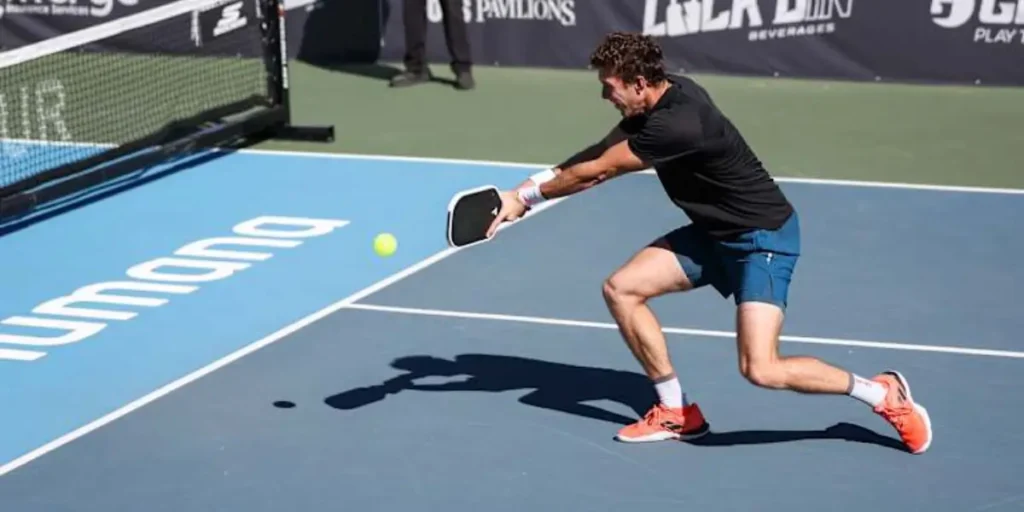
Once you establish a position at the kitchen, control becomes the priority. Dinking is not just touch. It requires patience, awareness, and discipline. You must dink while reading body position, paddle angle, and court spacing. Under pressure, the goal stays the same keep the ball unattackable and force the opponent to make the first mistake.
Net control follows naturally from strong dinking. Effective kitchen play means moving as a unit with your partner, closing gaps, and staying balanced throughout the rally.
At higher levels, advanced skills separate contenders from pretenders. Speed-ups must be selective, not emotional. Resets keep you alive in fast exchanges. Pattern-based shot selection helps you exploit opponent tendencies.
Adaptability wins matches because no two opponents play the same way. Build these skills daily with intent, not volume.
12 Steps to Become a Professional Pickleball Player
1. Track Your Ratings and Competitive Progress
Ratings show your true competitive level. If you are in the 3.0 to 3.5 range, your fundamentals are still developing, and the professional path is far away. 4.0 players perform well in club play but often struggle with consistency under tournament pressure.
The serious competitive level begins at 4.5. At this stage, players control rallies and understand positioning. To compete in open-level events, you usually need a 5.0 rating. Most professional tours expect players to be 5.5 or higher, along with strong tournament results.
Use DUPR ratings as feedback, not validation. Track how you perform against higher-rated opponents. Close losses often indicate progress. Heavy losses reveal gaps that need work. Ratings help you decide when to move up and when to refine your game.
| Tour/Event Type | Minimum DUPR Rating | Points/Qualification Needed | Notes |
|---|---|---|---|
| Local/Regional | 4.0-4.5 | N/A | Tournament consistency |
| RTA 500 (Entry) | 4.8+ | 1,500 points | Open qualifiers |
| PPA Challenger | 5.0+ | Regional top 16 | DUPR + results |
| RTA Finals | 5.2+ | 8,500 points (2026) | Top 24 get points |
| PPA Main Draw | 5.5+ | National ranking | Pro card eligible |
| MLP Tryouts | 5.0+ | Video + live event | Draft selection |
| World Elite | 6.0+ | Top 50 global | Ben Johns level |
2. Work with a Pickleball Coach
A coach accelerates progress by identifying weaknesses you cannot see in yourself. Self-practice often reinforces comfortable habits instead of fixing problems. A good coach focuses on decision-making, footwork, and shot tolerance under pressure.
At this level, coaching should go beyond basic technique. Sessions must address match situations and patterns. Apply feedback immediately and review progress regularly. One focused coaching session can replace weeks of guessing.
For players chasing the professional route, coaching is not optional. It provides structure, accountability, and direction.
3. Play and Drill as Much as You Can
Improvement comes from intentional volume. Random games improve fitness, but structured drilling builds reliable skills. Split time between match play and targeted drills. Focus on third shots, resets, and transition play.
Play against opponents who expose your weaknesses. Avoid staying in comfort zones. Each session should reveal one area to improve. Bring that weakness back into drills.
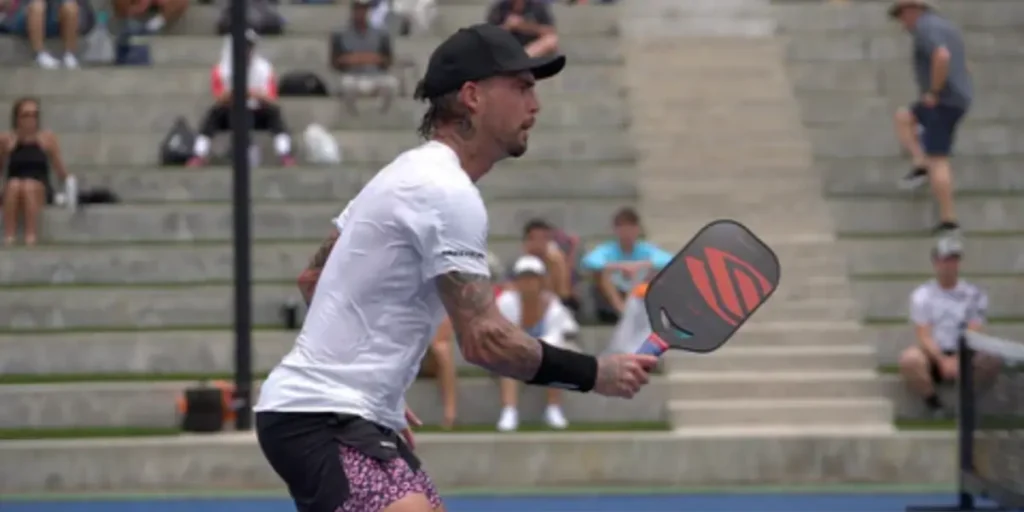
Consistency is built through regular, focused practice, not occasional long sessions. Professionals improve through daily discipline, not intensity alone.
4. Play in Amateur Tournaments Regularly
Amateur events teach you how your game holds up under pressure with real consequences. Use these tournaments to test decision-making, not to chase medals. Focus on shot selection, discipline, and emotional control during tight points.
Play consistently at the same level until results stabilize. Jumping levels too quickly creates confusion. Staying too long limits growth. Review each event honestly. Identify patterns that break down late in matches. Tournaments are classrooms. Treat every loss as information.
5. Record Yourself and Analyze Your Play
Video never lies. Recording matches reveals spacing errors, rushed decisions, and poor shot choices that feel invisible on court. Watch without emotion. Look for repeated mistakes rather than single errors.
Focus on positioning during transition zones and shot selection under pressure. Compare what you planned with what actually happened. Short review sessions after each tournament work best. This habit builds awareness faster than extra practice alone.
Players who analyze regularly improve faster because they fix causes, not symptoms.
6. Collaborate with Like Minded Similar Level Players
Similar-level partners push intensity and accountability. Sessions stay focused because everyone values improvement.
Avoid groups that treat playtime as social time only. Seek partners who want feedback and challenge habits. Rotate roles during drills and discuss outcomes openly. Growth accelerates when effort aligns across the group.
Strong training environments create professional behavior long before professional results appear.
7. Join as Many Pickleball Clinics as You Can
Attend clinics with a learning mindset, not with the goal to impress. Absorb what fits your game and test it later in practice. Take notes immediately after sessions. One useful insight applied well is enough to justify attendance.
Clinics also help you understand current competitive standards. You see where your execution stands compared to serious players. This awareness keeps expectations realistic and training focused.
8. Play Against Players Better Than You
Facing stronger opponents accelerates development faster than safe wins. Better players force quicker decisions, cleaner execution, and smarter positioning. Losses here are productive, not discouraging.
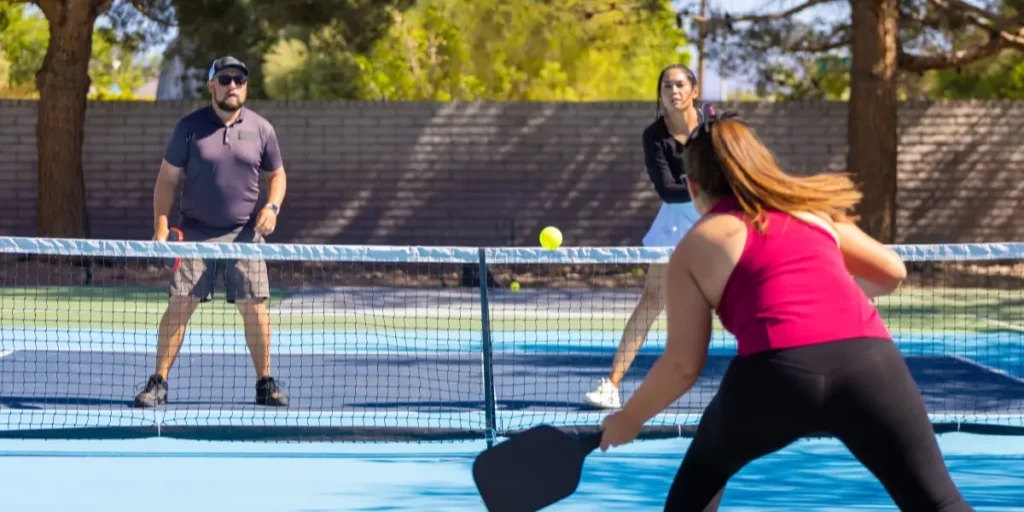
Do not chase points recklessly. Focus on staying composed and extending rallies. Notice where pressure breaks your structure. Those moments define training priorities.
Regular exposure to higher-level play recalibrates standards. What once felt fast becomes normal. This adjustment is essential before stepping into open and professional events.
9. Join a Professional Pickleball League
Leagues introduce structure and accountability. Playing within an organized competitive system exposes you to consistent high-level matches. This environment mirrors professional demands more closely than casual tournaments.
Leagues teach you how to manage schedules, prepare mentally, and perform repeatedly. Results matter, but adaptation matters more. You learn to adjust strategies week to week based on opponents.
Entry into semi-professional or regional leagues often marks the transition from serious amateur to emerging pro. Treat league play as preparation, not validation.
10. Develop Physical Fitness Alongside Skill Training
Focus on agility, balance, and core strength first. These directly affect movement and shot stability. Add endurance training to maintain intensity through long days. Recovery matters as much as workload. Poor recovery leads to inconsistent play and injury setbacks.
Professional-level players train their bodies to support their skills, not replace them. Fitness allows your technique to stay reliable when pressure peaks.
11. Be Open to Learning and Feedback
Listen first, then evaluate. Not every suggestion applies, but every comment deserves consideration. Apply changes in practice before rejecting them. Growth often hides behind temporary discomfort.
Professional-level players remain students of the game. Openness creates adaptability, which decides matches at elite levels.
12. Watch Other Professional Pickleball Players
Notice how pros build points patiently. Watch how they recover after mistakes. Compare their positioning to yours in similar situations. This builds a mental blueprint for elite play.
Consistent study sharpens game intelligence. Professionals learn from others continuously, even after reaching the top.
Compete Strategically to Move Toward Pro Status
Use Local and Regional Tournaments as Checkpoints
Local and regional tournaments should be treated as checkpoints rather than learning grounds. You enter these tournaments to confirm consistency. If results fluctuate widely, you are not ready to move up.
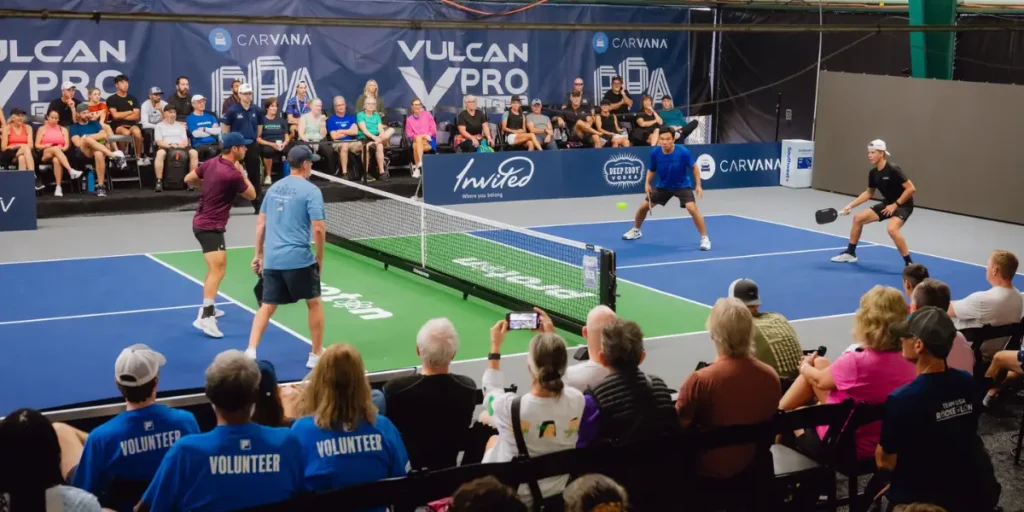
Stay at this level until performance stabilizes across multiple events. Look for repeatable patterns, not one strong weekend. Advancement should be based on results against the same level, not hopes of surviving higher brackets.
Moving up without stability creates false signals and stalls development.
Enter Open and High-Level Tournaments with Clear Intent
Open and high-level tournaments are not practice arenas. They test composure, execution, and endurance under elite pressure. Enter them only when you can compete rather than survive.
Expect early exits initially, but track quality, not outcome. Are the points competitive? Are losses controlled? Are mistakes forced or self-inflicted? These answers guide readiness.
Consistent competitiveness at this level signals the transition toward professional qualification rather than ambition alone.
Common Mistakes That Stop Players from Turning Pro
One of the biggest mistakes is trying to turn professional too quickly. Many players chase high-level events before their skills are stable. This leads to repeated losses and damaged confidence. Progress requires patience and realistic milestones.
Another common error is avoiding strong opponents. Playing only comfortable matches protects the ego but limits growth. Tough competition exposes weaknesses that practice cannot reveal. Without this exposure, improvement slows.
Ignoring physical recovery also holds players back. Overtraining without proper rest leads to fatigue and injuries. Consistent performance depends on a healthy body. Recovery routines are part of professional preparation.
Training without structure is equally damaging. Random sessions without goals create the illusion of work without results. Successful players follow clear plans, track progress, and adjust regularly. Avoiding these mistakes often matters more than adding new skills.
How Long Does It Take to Become a Professional Pickleball Player
There is no fixed timeline for turning professional. Most serious players need two to four years of structured training and competitive play before professional events become realistic.
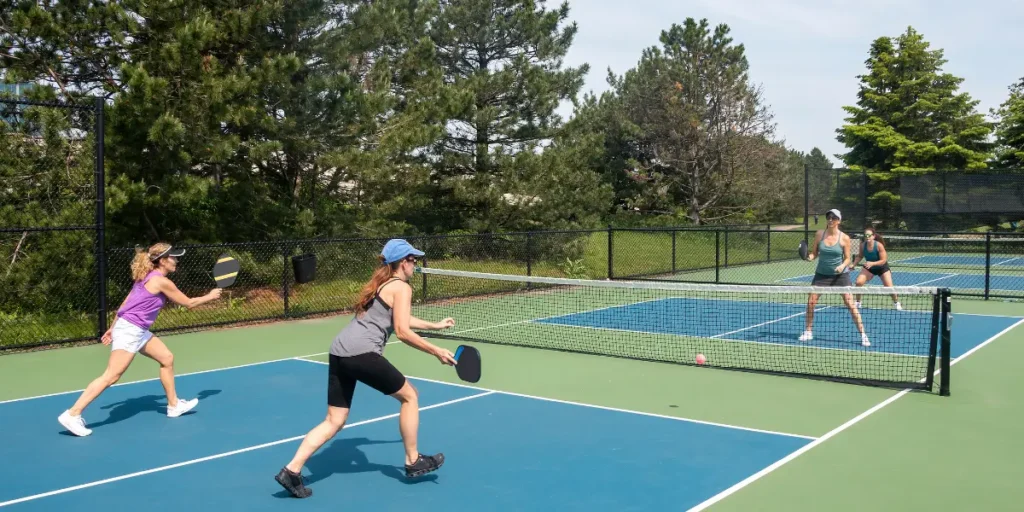
Players with strong backgrounds in tennis or similar sports may progress faster, but still require time to adjust to pickleball-specific skills.
Some players move quickly with daily training, coaching, and frequent tournaments. Others follow a slower but more stable path. Speed matters less than consistency. Real progress is measured by how well you compete against stronger opponents over time.
Plateaus and setbacks are normal. Players who stay disciplined and patient are the ones who move forward.
Step-by-Step Roadmap to Start Your Pro Pickleball Journey
Begin by building your game to a consistent 4.5 level. This means you can compete well in tournaments without large performance swings. Do not rush to higher levels until your results become steady. Consistency matters more than occasional wins.
Create a weekly routine that includes focused drilling, competitive matches, physical training, and proper recovery. Every session should have a purpose. Track your progress every month and review where points are being lost in real matches. Adjust your training based on those weaknesses.
Increase tournament difficulty gradually. Do not play every event available. Choose competitions that match your current level and challenge you slightly. Set basic fitness goals for endurance movement and injury prevention.
After each tournament, review what worked and what failed. Players reach the professional level by following clear steps patiently, not by skipping stages.
FAQs
Not everyone reaches the professional level. It requires long-term commitment, disciplined training, and a competitive mindset. Athletic background helps, but consistency and smart development matter more than talent alone.
Most professional players compete at 5.5 or higher. Reaching this level also requires strong tournament results against open-level opponents, not just a high rating number.
Serious players usually train 12 to 20 hours per week. This includes drilling, match play, fitness, and recovery. Quality of training matters more than total hours.
Pickleball allows a wider age range compared to many sports. Younger players may progress faster physically, but older players can succeed through experience, strategy, and consistency.
Conclusion
Pursuing professional pickleball requires serious commitment. It demands time, discipline, financial investment, and emotional control.
This path suits players who enjoy structured training, accept losses as part of growth, and stay consistent even when motivation fades. Professional players rely on habits, not excitement.
This journey is not right for everyone, and that is completely fine. If you value social play, flexible schedules, or casual competition, recreational pickleball offers long-term enjoyment without pressure. Choosing balance over grind is not failure. Problems only arise when expectations exceed effort.
A professional mindset requires patience, accountability, and honest self-evaluation. Progress is slow and often quiet. If you are willing to commit to the process rather than chase titles, this path can be rewarding and sustainable.