

When do you switch sides in pickleball is one of the most common rules players misunderstand. Some switch too early. Others never switch at all. This confusion often leads to arguments, delays, and unfair advantages during games.
In this article, you will learn exactly when side switching happens and when it does not. We will break down the official rules used in recreational play tournaments and professional matches.
You will also understand why switching sides exists and how it affects fairness on the court. Whether you are new to pickleball or already playing competitively this guide will give you clear answers so you can play with confidence and avoid rule mistakes.
Why Switching Sides Exists in Pickleball
Switching sides in pickleball exists to maintain fairness rather than add complexity. Outdoor courts often create uneven conditions. Sun glare, wind direction, and court surface wear can give one side a clear advantage.
Side switching reduces the impact of these factors, so neither player nor team benefits for too long from conditions they did not earn.
Unlike tennis, pickleball limits side switching to avoid disrupting match flow. Games move quickly, and frequent switching would break rhythm and momentum. The rules balance fairness with continuity, so play stays smooth and structured.
Understanding this purpose helps players accept the rule without confusion. When you know why side switching exists, you also understand why it does not happen often. The rule maintains competitive balance while keeping matches efficient for both players and officials.
When Do You Switch Sides in Pickleball? Official Rules Explained
| Game Format | Switch During Game | When to Switch | Switch After Game |
|---|---|---|---|
| Game to 11 | ❌ No | Not applicable | ✅ Yes |
| Game to 15 | ✅ Yes | At 8 points | ✅ Yes |
| Game to 21 | ✅ Yes | At 11 points | ✅ Yes |
In most pickleball games, we play to 11 points, and there is no side switching during the game. Once the game starts, both teams stay on the same side until the final point is played. This is how most recreational games, leagues, and many tournaments are run.

When a game to 11 ends, players do switch sides before the next game begins. This switch happens only between games, not during play. The reason is fairness, especially on outdoor courts where sun or wind can give one side an advantage. This side change is normal and expected in match play.
Side switching during a game only happens in longer formats. If the game is played to 15 or 21 points, players switch sides once at the halfway mark. That means switching at 8 points in a game to 15 and at 11 points in a game to 21. The switch happens right after the rally ends and before the next serve.
After switching sides, players keep the same serving and receiving positions. Only the court ends change. Knowing this order helps avoid confusion and keeps the game moving smoothly without unnecessary interruptions.
Switching Sides in Tournament Play
In tournament matches played to 11 points, there is no side switching during the game. Teams stay on the same side until the game ends, and the switch happens only between games in a match. This rule is consistent across most sanctioned tournaments.
When tournaments use games played to 15 or 21 points, players switch sides once at the halfway mark. The switch happens right after the rally finishes, and play continues without a timeout. Serving and receiving positions stay the same after the switch.
Before a match starts, it is always smart to confirm the game format. Many tournament delays happen simply because players assume the wrong format.
Switching Sides in Recreational and Casual Play
In recreational games, most players still follow the standard rule of no side switching during games to 11 points and switching sides only after the game ends. That said, casual play allows more flexibility.

If sun glare, wind, or uneven courts create a clear disadvantage, players often agree to switch sides during the game. These adjustments work best when everyone agrees before play begins rather than stopping mid-rally.
In casual settings, clear communication matters more than strict rule enforcement. A quick agreement at the start keeps the game friendly and moving smoothly.
Do You Switch Sides After Every Game
Yes, players do switch sides after a game ends in standard match play. In games played to 11 points, there is no side switch during the game, but once the game finishes and a new one is about to start, teams change court ends.
This switch happens only between games, not after every serve or point. Many beginners mix up side switching with serving rotation, but they are two separate rules. Side switching simply helps balance court conditions across games without slowing down play.
Switching Sides in Pickleball Doubles vs Singles
The side-switching rule works the same way in doubles and singles. In games to 11 points, there is no side switch during play. In games to 15 or 21 points, players switch sides once at the halfway mark.
The only difference is how players move. In pickleball singles, each player switches sides on their own. In doubles, both partners move together and keep their serving positions. Knowing this makes side changes quick and avoids positioning mistakes.
What Happens If Players Forget to Switch Sides
If players forget to switch sides, what happens next depends on when the mistake is noticed. If it is caught quickly, play stops, and everyone moves to the correct ends before the next serve. The score and serving order stay exactly the same.
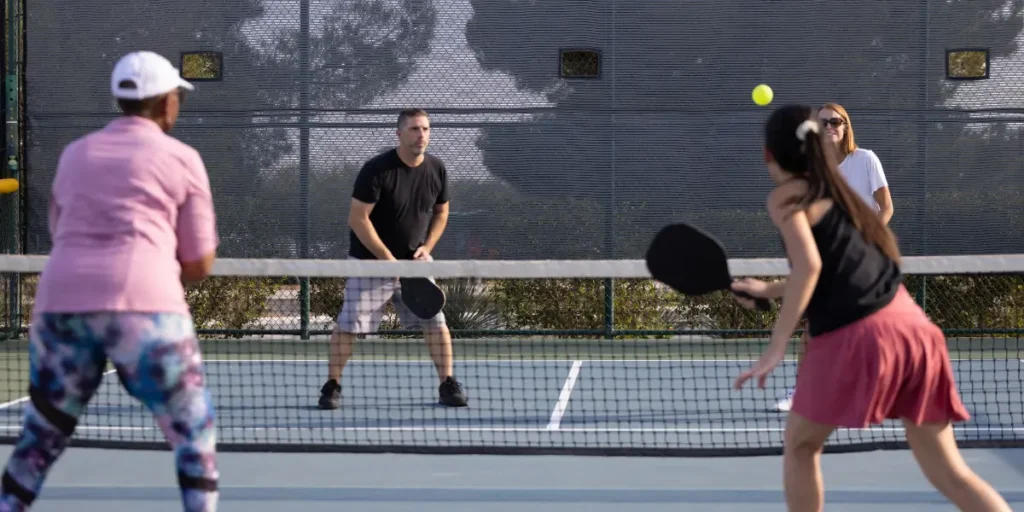
If several rallies have already been played, officials usually allow the match to continue from that point. Points are not replayed.
In recreational games, players often agree to fix it right away. In tournaments, the referee makes the call. The simple rule is to correct it as soon as possible without resetting the score.
Common Myths About Switching Sides in Pickleball
A common myth is that players switch sides after every serve or every point. That is not true. Side switching depends on the game format, not on serving rotation.
Another myth is that doubles and singles follow different side-switching rules. The rules are the same. Only player positioning changes.
Some players also believe sides always switch at 6 points in games to 11, which is incorrect. Knowing these facts helps avoid confusion and keeps games moving smoothly.
FAQs
No, players do not switch sides at 6 points in games played to 11. In standard games to 11, there is no side switching during the game. The only time sides change is after the game ends, before the next game begins. Switching at 6 is a common misunderstanding.
Yes, players switch sides after a game ends in match play. This happens between games and not during play. The switch helps balance court conditions, such as sun and wind. It does not affect serving order or player positions.
Yes, professional players follow the same side-switching rules based on game format. Games to 11 do not include a mid-game switch. Longer formats include one switch at the halfway point to ensure fairness under changing conditions.
Yes, in recreational play, players can agree to switch sides early if conditions feel unfair. Sun glare, wind, or uneven courts often lead to these agreements. The key is to decide before the game starts to avoid confusion or disputes.
Related Post
Conclusion
Understanding when to switch sides in pickleball removes confusion and keeps games fair and efficient. In standard games played to 11 points, there is no side switching during play. Players change sides only after the game ends, before starting the next one.
Longer formats include a single mid-game switch to balance court conditions without disrupting flow.
Knowing these rules helps players avoid arguments, delays, and unnecessary interruptions. It also ensures that matches stay consistent, whether you are playing recreationally or in a tournament setting.
Side switching is about fairness, not strategy, and following the correct timing keeps everyone on the same page.
As you continue playing pickleball, take a moment to confirm the game format before starting. A clear understanding of side-switching rules improves match flow, builds confidence, and allows you to focus fully on playing your best game.