
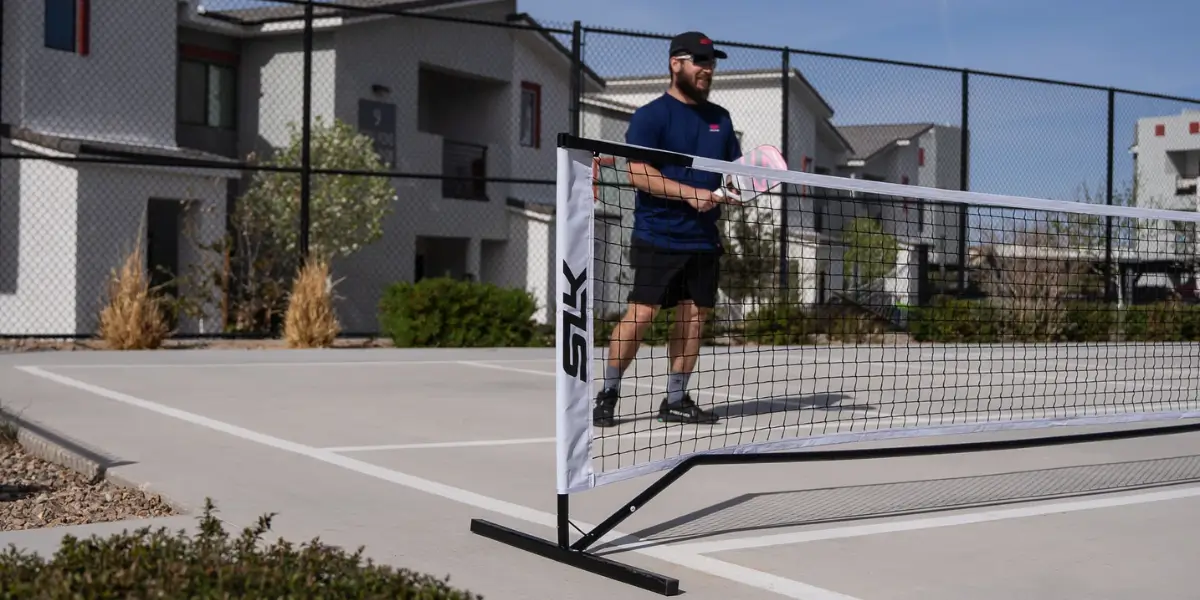
No. According to official pickleball rules, if your serve hits the net and fails to land correctly in the service box, the serve becomes a fault.
To play pickleball fairly and avoid unnecessary faults, players must clearly understand serving rules. Serving plays a critical role in every rally, and when players master legal serving techniques, they gain better control, consistency, and confidence during matches.
What Happens If the Ball Hits the Net on a Serve in Pickleball?
Official Pickleball Serving Rules (USA Pickleball & IPTPA Guidelines)
Pickleball enforces strict serving rules, and the net plays an important role in determining whether a serve is legal or not.
- If a serve hits the net and lands outside the correct service box, the referee immediately calls it a fault.
- If a serve hits the net and lands inside the correct service box, it is still a fault, because pickleball no longer allows let serves.
- A fault causes the server to lose the serve in singles or pass the serve to the next player in doubles.
Net Serve Rule: Let Serves Are No Longer Allowed
In the past, pickleball allowed a “let serve.” If the ball touched the net but landed in the correct service box, players replayed the serve. However, officials removed this rule in 2021.
The rule change aimed to eliminate arguments, reduce interruptions, and keep the game moving at a faster pace. Today, every serve must cleanly clear the net to remain legal.
Why Did Pickleball Change This Rule?
With the removal of let serves, players must now focus on delivering clean, controlled serves that fully clear the net. Any contact with the net automatically results in a fault.
This update has made pickleball more skill-based. Players now rely on precision, consistency, and proper technique rather than luck. As a result, many players have improved their serving mechanics and developed more dependable serving routines.
What Are the Different Types of Pickleball Serves?
Serving forms the foundation of every pickleball point. Choosing the right serve helps players maintain accuracy and reduce mistakes.
Drop Serve vs Traditional Serve
Pickleball allows two main types of serves.
| Serve Type | Can the Ball Hit the Net? | Rules | Best For |
|---|---|---|---|
| Traditional Serve | No (net contact = fault) | Must clear the net and land in the service box | Advanced players |
| Drop Serve | No (same rule applies) | Ball may bounce once before contact | Beginners & injury recovery |
In a traditional serve, players strike the ball underhand before it touches the ground. In a drop serve, players allow the ball to bounce once before hitting it.
Despite this difference, both serve types must fully clear the net and land inside the correct service area to remain legal.
Common Pickleball Serving Faults
Many players lose points because of simple serving mistakes. One of the most frequent faults occurs when the ball hits the net during a serve, which immediately ends the serving attempt.
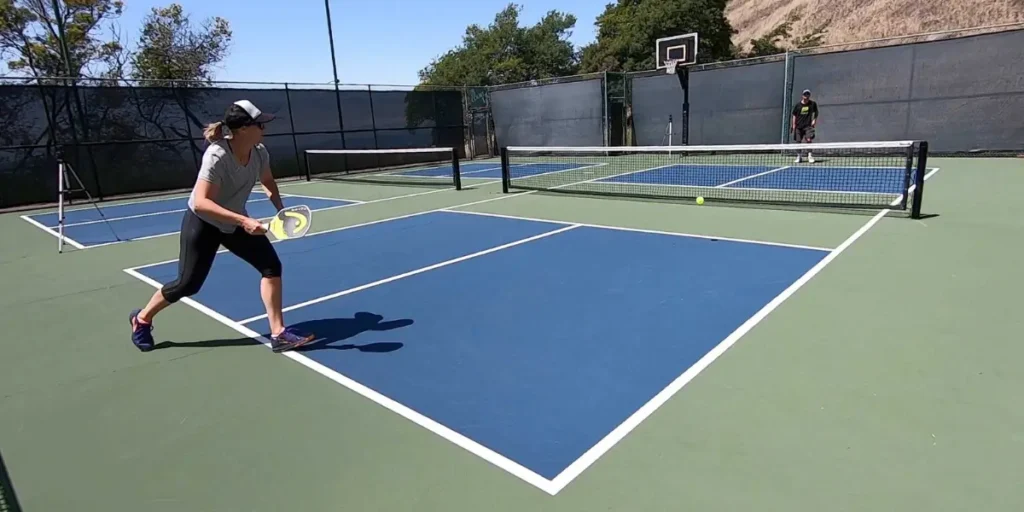
Foot faults also happen often. Players commit this mistake when they step on or cross the baseline before making contact with the ball. Maintaining proper foot positioning behind the baseline helps prevent this issue.
Illegal serving motions can also result in faults. Players must strike the ball below the waist using an underhand motion. Overhand hits or contact above the waist violate serving rules.
During rallies, players should also understand whether a double hit in pickleball is allowed, as improper paddle contact can lead to additional faults.
Why Beginners Struggle With Pickleball Serves
Many beginner pickleball players struggle with serving because pickleball uses different serving rules than most racket sports. New players often need time to adjust to the underhand serving motion, proper ball contact, and correct court positioning.
Serving also requires consistency and patience, which many beginners develop gradually through practice. Small mistakes in timing or positioning can quickly turn a simple serve into a fault.
The removal of let serves has made serving even more challenging for new players. Since any net contact now results in a fault, beginners must focus more carefully on clean net clearance and controlled placement during every serve.
As players gain more experience and confidence, serving usually becomes more natural and reliable during matches.
Related Post: Can You Touch the Net in Pickleball
How to Stop Hitting the Net on a Pickleball Serve
Many pickleball players struggle with hitting the net during serves, especially beginners who are still developing proper control and timing. In most cases, the problem happens because players focus too much on power instead of accuracy and consistency.
One of the easiest ways to avoid net faults is by aiming slightly higher above the net. Many players try to keep their serves extremely low to make returns more difficult, but this often causes the ball to clip the net instead of clearing it safely.
Using a smooth and controlled serving motion also improves consistency. Rushed swings usually create poor timing and weak contact, which increases the chances of hitting the net during important points.
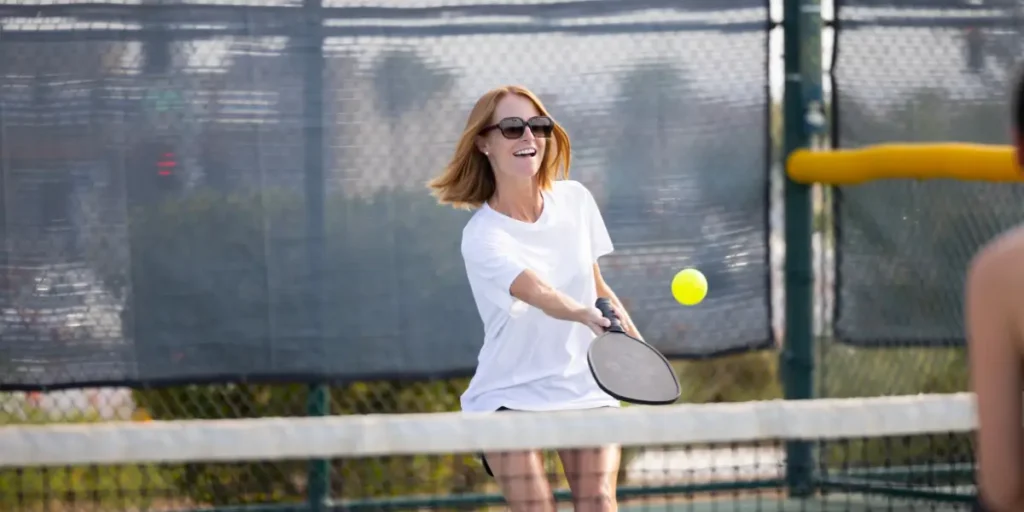
Paddle angle plays a major role as well. If the paddle face points downward during contact, the ball naturally travels lower toward the net. Keeping the paddle slightly upward helps create better net clearance while maintaining control.
Many experienced players also recommend using a continental grip for better serve control. This grip helps players keep the paddle stable during contact and creates a smoother serving motion. A continental grip also improves ball placement and makes it easier to generate consistent net clearance without overhitting the serve.
Balanced foot positioning is equally important during serves. Standing fully behind the baseline with stable footing helps players generate cleaner contact and more reliable placement.
Regular practice can also make a huge difference. Simple target serving drills help players improve accuracy, confidence, and consistency over time. As players become more comfortable with their serving mechanics, net faults become far less common during matches.
Best Pickleball Serve Drills to Avoid Net Faults
Targeted practice can significantly improve serving accuracy. Wall drills help players develop consistency by aiming at a specific height or mark, reinforcing proper paddle angle and swing path.
Target serving drills also build precision. Placing cones or markers inside the service box encourages controlled placement rather than power-based serves.
Net clearance drills focus on serving the ball just high enough to clear the net. These drills train players to develop touch and confidence, making legal serves more reliable during competitive play.
FAQs
No. Pickleball does not allow second serves. Once a player commits a fault, the serve ends immediately. Players must rely on accuracy and control because they do not get another attempt.
No. The same net serve rules apply to both singles and doubles. In both formats, players must clear the net cleanly and land the serve inside the correct service box.
No. All USA Pickleball–sanctioned tournaments follow the same serving rules. These consistent standards ensure fair play across recreational, amateur, and professional levels.
It still counts as a fault. Since pickleball removed let serves, any net contact during a serve results in a fault, regardless of where the ball lands.
Conclusion
In pickleball, a serve must completely clear the net to be legal. If the ball touches the net at any point during the serve, the rules clearly define it as a fault, even when the ball lands inside the correct service box.
Since pickleball no longer allows let serves, players cannot rely on luck or replays to save a weak serve.
This rule places greater importance on control, accuracy, and proper serving mechanics. By focusing on correct foot positioning, a smooth underhand motion, and consistent net clearance, players can reduce faults and serve with confidence.
Regular practice and simple serving drills help build reliability, allowing players to start each point strong and maintain the flow of the game without unnecessary interruptions.