
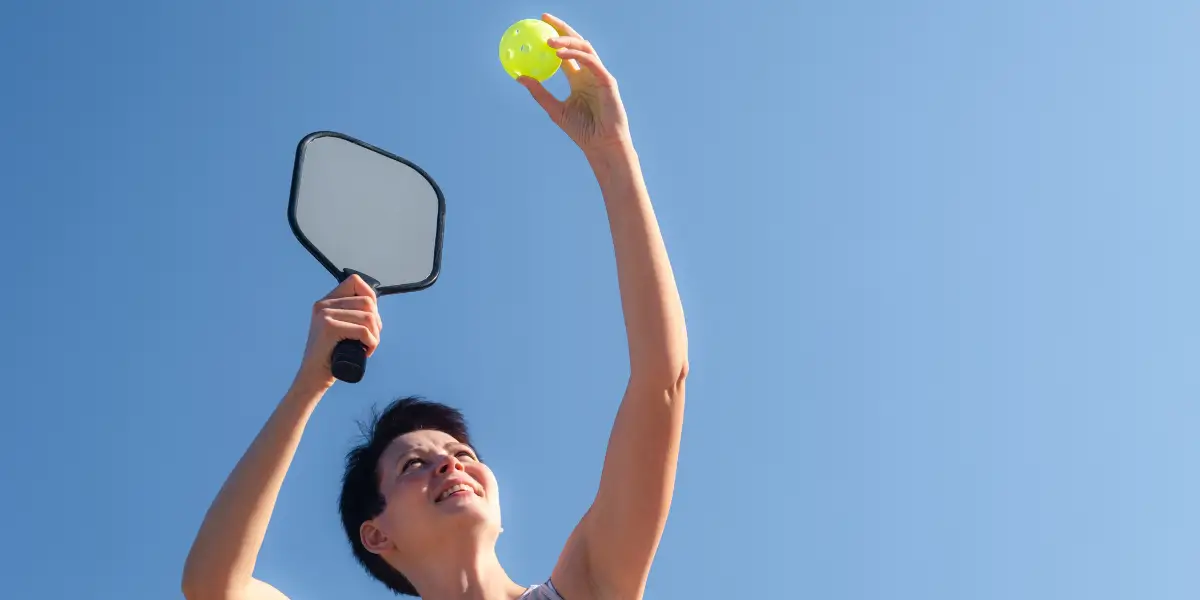
Overhand shots often create confusion in pickleball. Many players are unsure whether swinging above the shoulder is legal during a rally or if it results in a fault. This hesitation can slow decision-making and turn attacking opportunities into lost points.
In this explanation, you will learn exactly when overhand shots are allowed and when they are not. We will break down the rules using real game situations, explain the difference between serves and rallies, and clear up common misunderstandings.
By the end, you will know how to hit overhand with confidence, improve your shot selection, and stay fully within the rules at every level of play.
Can You Hit Overhand in Pickleball
Yes, you can hit overhand in pickleball during a rally, and it is completely legal. The confusion usually comes from mixing up rally rules with serving rules. Once the serve is complete, players are free to swing overhand as long as they follow the court rules.
An overhand shot simply means the paddle contacts the ball above shoulder level, and this motion is allowed in live play.
During rallies, overhand shots often appear as overhead smashes, controlled putaways, or aggressive attacks on high balls. These shots help players finish points quickly, especially when opponents leave the ball too high.
The key detail to remember is that pickleball rules do not restrict paddle motion during rallies. They only restrict where your feet are and how the serve is delivered.
Understanding this basic distinction removes most of the hesitation players feel. When the ball is live, and your feet are in a legal position, an overhand swing is not only allowed but often the smartest shot to play.
When You Can Hit Overhand in Pickleball
You can hit overhand in pickleball whenever the ball is in play after the serve and the situation allows an attacking shot. High balls and lobs are the most common moments where an overhand swing makes sense.
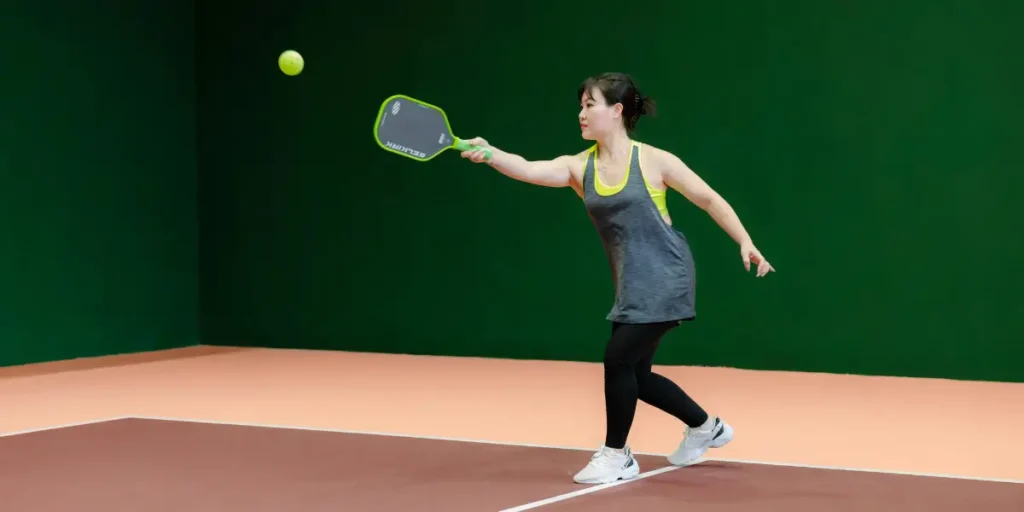
When an opponent sends the ball deep and above your shoulder level, an overhand shot lets you maintain control and finish the point instead of letting the ball drop.
Pop-ups from opponents also create perfect overhand opportunities. These balls sit high in the air and give you time to position your body and strike downward with accuracy.
During rallies, overhand shots are often used to apply pressure and force errors. As long as the ball is live and your feet are placed legally, the rules fully allow this type of swing.
When You Cannot Hit Overhand in Pickleball
There are only a few situations where overhand shots are not allowed. The most important restriction applies to the serve. Pickleball rules require the serve to be underhand, which makes any overhand serving motion illegal.
Kitchen foot faults are another common issue. If you volley an overhand shot while your foot touches the kitchen line or lands inside the zone, the shot becomes illegal. This fault is about positioning, not technique.
Beginners often believe overhand shots are banned altogether, which leads to passive play. In reality, the restriction is narrow and specific. Understanding these limits allows you to stay aggressive while avoiding simple rule violations.
Can You Hit Overhand Near the Kitchen
You can hit overhand near the kitchen, but the non-volley zone rule still applies. The key factor is not how you swing but where your feet are positioned at contact. If you strike the ball before it bounces, you must stay completely outside the kitchen and avoid touching the line.
Ball contact and foot position are often confused. Many players think an overhand swing near the kitchen is illegal, which is not true. The fault occurs only when a player volleys while standing in the kitchen or stepping into it during the shot. The swing itself never causes the fault.
Legal situations include hitting an overhand after the ball bounces in the kitchen or striking a volley while fully outside the zone. Once players separate foot placement from paddle motion, the rule becomes much easier to follow.
Can You Serve Overhand in Pickleball
No, you cannot serve overhand in pickleball, and this rule is very strict. The serve must be delivered with an underhand motion where the paddle contacts the ball below the navel. The paddle head also needs to move upward at contact, and both feet must stay behind the baseline until the ball is struck.
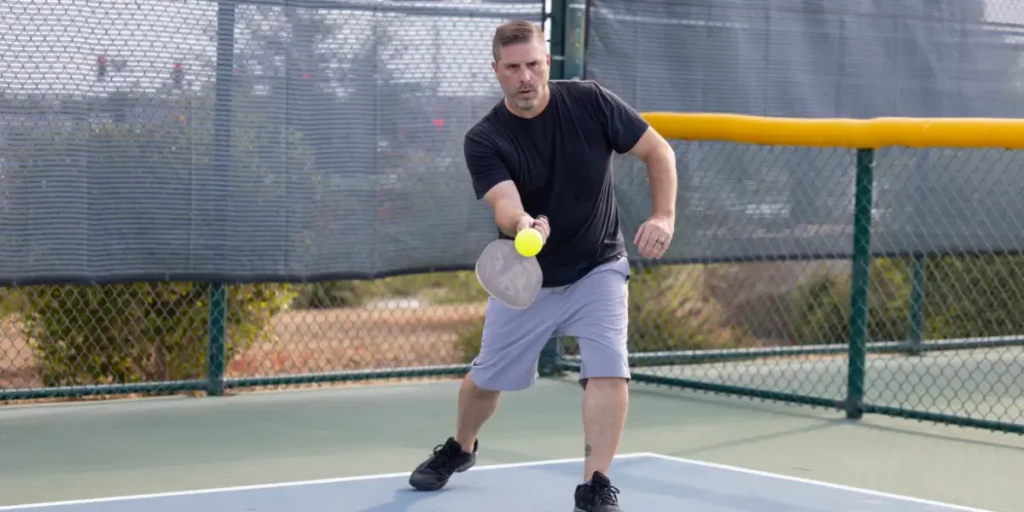
An overhand serve breaks these conditions immediately. Even if the serve lands in the correct service box, the motion itself makes it illegal.
This is why many beginners lose points early. They focus on placement but ignore the required mechanics. Once you separate serving rules from rally rules, the confusion disappears.
Overhand Shot vs Overhand Serve
| Feature | Overhand Shot | Overhand Serve |
|---|---|---|
| When it happens | During a rally after the serve | At the start of the point |
| Is it legal | Yes when foot position is legal | No it is always illegal |
| Swing motion | Can be above the shoulder | Must be underhand only |
| Ball contact point | Anywhere depending on the shot | Below the navel is required |
| Court position rule | Kitchen rules apply on volleys | Feet must stay behind baseline |
| Purpose | Attack finish points apply pressure | Start the rally legally |
| Common mistake | Confusing foot fault with swing | Feet must stay behind the baseline |
What is a Spike in Pickleball?
A spike in pickleball refers to an aggressive downward strike on a high ball, usually near the net. Players often confuse spikes with overhead smashes because both look similar. In reality, a spike is simply a type of overhand shot used to end the point quickly.
The confusion comes from terminology, not rules. A spike is legal during a rally when the foot position is correct and the ball is contacted cleanly. It becomes illegal only if the player violates the kitchen rule or attempts it on a serve. Knowing this helps players attack confidently without second-guessing the rules.
How to Hit Overhand in Pickleball
1. Court Positioning
Proper court positioning makes overhand shots safer and more effective. Stay balanced with your weight slightly back and create space between your body and the ball. Move early instead of reaching late so you can strike the ball at a comfortable height.
A simple tip many experienced players follow is to take one quick step back as soon as they see a lob. That extra space often turns a rushed swing into a clean put-away.
2. Timing and Contact Point
Timing matters more than power on an overhand shot. Let the ball reach its highest controllable point and make contact slightly in front of your body. This contact point allows better control and reduces errors.
If you ever feel rushed, pause for a split second and let the ball drop into your hitting zone. Most missed overheads happen because players swing too early, not because of poor technique.
3. Control and Recovery
Control keeps overhand shots reliable. Focus on directing the ball rather than hitting as hard as possible. Aim for open court areas and use a smooth downward swing.
After contact, recover immediately to a ready position.
Skilled players treat the overhand as part of the rally, not the end of movement. That mindset helps handle quick returns and keeps pressure on opponents.
FAQs
An overhand smash is completely legal during a rally and does not count as a fault by itself. Problems only occur when a player violates the non-volley zone rule or attempts the same motion on a serve. As long as foot positioning remains legal, the shot is allowed. Many points end cleanly with well-executed smashes.
Beginners can use overhand shots safely if they focus on balance and control instead of power. Proper positioning and patience help avoid rushed swings and unforced errors. Learning when to let the ball drop also improves consistency. With practice, overhand shots become a reliable scoring option.
Yes, you may hit overhand after the ball bounces in the kitchen because it becomes a groundstroke. At that point, you are allowed to stand inside the non-volley zone. The restriction applies only to volleys. Understanding this helps players attack short balls confidently.
Most hesitation comes from confusing serve rules with rally rules. Many players carry tennis habits, or half learned advice, into pickleball. Once the difference is clear, overhand shots feel natural. Confidence grows quickly with correct rule knowledge.
Conclusion
Overhand shots are a legal and valuable part of pickleball when used at the right time. Most confusion comes from mixing serving rules with rally rules and misunderstanding the non-volley zone.
Once these differences are clear, overhand shots become a confident attacking option instead of a risky decision.
By focusing on foot position, timing, and control, you can use overhand shots to apply pressure and finish points without breaking the rules.
Understanding these details allows you to play faster, smarter, and with far more confidence at any level of the game.