
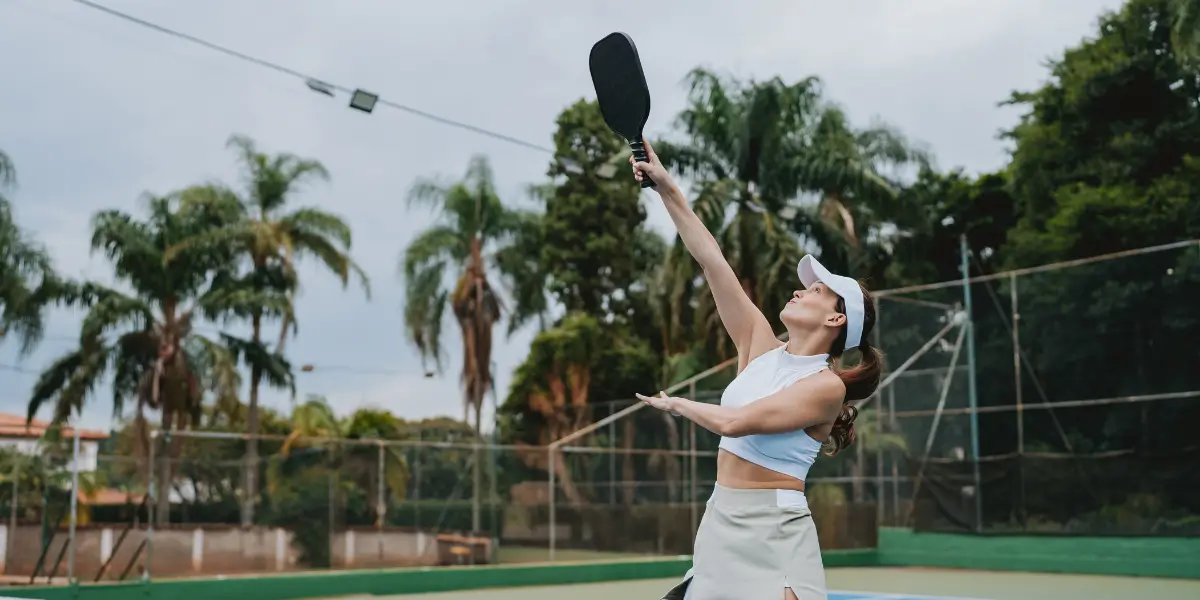
Imagine yourself in the middle of an intense pickleball rally. Your opponent fires a fast shot toward you. Instead of waiting for the ball to bounce, you react quickly and hit it out of the air. This shot is called a volley. It helps you stay in control, apply pressure, and take charge of the net.
Players use volleys as a powerful technique in pickleball. When you volley well, you control the pace of the game, challenge your opponent, and maintain strong positioning. Unlike groundstrokes, which require the ball to bounce first, volleys demand quick reflexes and smart shot placement.
When you master volleys, you improve your overall performance and dominate rallies more effectively. Now, let’s explore how you can improve your volley skills and use them successfully in matches.
What is a Volley in Pickleball?
In pickleball, a volley means hitting the ball in the air before it touches the ground. Players usually use this shot near the non-volley zone (NVZ), also known as the kitchen.
Near the kitchen, players need fast reflexes, good balance, and strong paddle control. When you stay alert in this area, you can intercept shots early and keep pressure on your opponent.
Why Are Volleys Important?
Volleys keep rallies fast and aggressive. When you place a volley accurately, you force your opponent to make mistakes. As a result, they may return weak shots or commit errors.
Players who use volleys effectively gain a strong strategic advantage. They create sharp angles, reduce their opponent’s options, and control the flow of the game.
Volleys also help players shift smoothly from defense to offense. For example, you can turn a defensive block into an attacking shot. When you understand when and how to volley, you improve your chances of winning crucial points.
Where Can You Volley?
Although volleys are very useful, players cannot perform them inside the kitchen unless the ball has already bounced.
This rule prevents players from standing close to the net and smashing every shot downward. Because of this, smart players position themselves just outside the non-volley zone.
When you stand in the right position, you can execute volleys safely and effectively without committing a fault.
What is a Half Volley in Pickleball?
A half volley means hitting the ball immediately after it bounces on the court. Instead of waiting for the ball to rise, you strike it quickly just after contact with the ground.
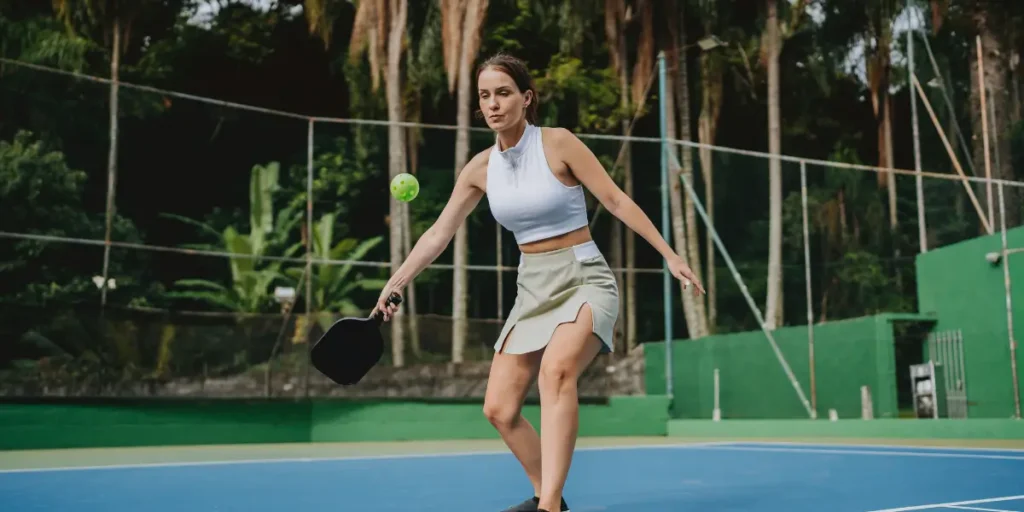
This shot helps you when you do not have enough time to step back and play a full groundstroke. At the same time, it allows you to stay in control of the rally.
When you execute a half volley correctly, you absorb the ball’s speed and redirect it smoothly. You use very little backswing and focus more on timing and balance.
Players often use this shot near the kitchen line or when they find themselves in a defensive position against fast shots.
Rules of Volleys in Pickleball
Players must always perform volleys from behind the non-volley zone line. During or after a volley, you must not step into the kitchen.
If your body or momentum carries you into the non-volley zone after hitting a volley, the referee calls it a fault.
You must send the ball over the net and land it inside your opponent’s court. If the ball hits the net and falls back on your side, or lands outside the opponent’s area, you lose the rally.
Before volleying, both teams must follow the two-bounce rule. First, the serve must bounce once on the receiver’s side. Then, the return must also bounce on the server’s side. Only after these two bounces can players start volleying legally.
Types of Pickleball Volleys & When to Use Them
Not all volleys work the same way. Different situations require different techniques. When you understand which volley to use, you gain better control over the match.
Smart players select their volleys carefully based on their opponent’s position and the speed of the rally.
Here are the four main types of pickleball volleys that players use in competitive matches.
Punch Volley (Power & Precision)
Players use the punch volley most often for aggressive play. When you want to attack your opponent, you use this volley to apply pressure.
To perform a punch volley, you move your paddle forward quickly and firmly. Your paddle works like a boxing glove and “punches” the ball toward your opponent.
You should keep your paddle face perpendicular to the court. At the same time, you must use a short and controlled movement from your elbow. This technique gives you better accuracy and balance.
For best results, aim your punch volley at your opponent’s feet. This placement makes it difficult for them to return the ball effectively.
Roll Volley (Topspin Attack)
A roll volley adds topspin to the ball and makes it harder for opponents to control their return.
When you hit a roll volley, the spin forces the ball to dip quickly after crossing the net. Because of this, your opponent gets less time to react.
You should use this volley when you want to push your opponent deep into their backcourt or when you want to attack a soft return.
To execute this shot, brush the ball with a low-to-high paddle motion. This movement creates topspin and keeps your shot aggressive and controlled.
Drop Volley (Soft Touch for Control)
Players use a drop volley, also called a block volley, to slow down the pace of the game. Instead of hitting the ball hard, you absorb its energy and guide it softly over the net.
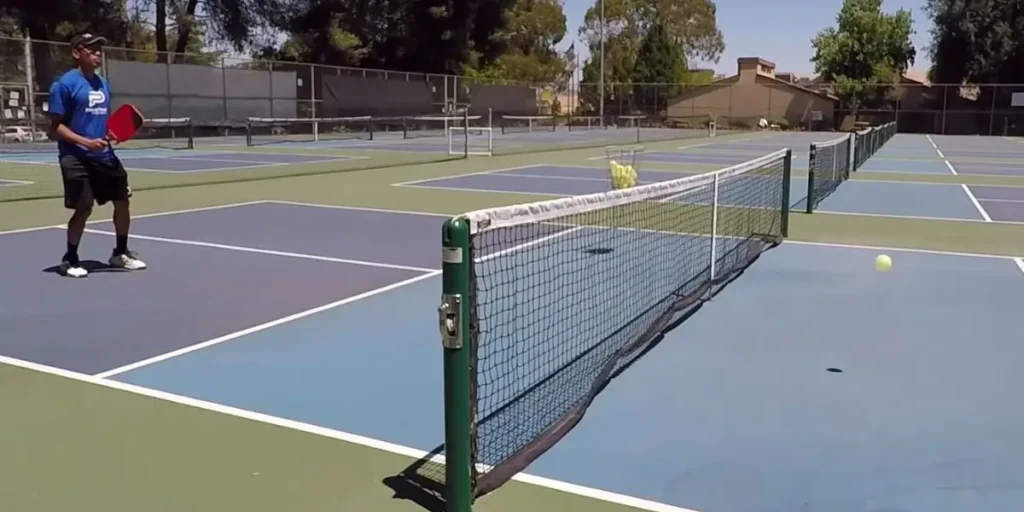
This shot helps you when your opponent drives powerful shots at you. By using a drop volley, you neutralize their attack and reset the rally.
To perform this shot, loosen your grip slightly and angle your paddle upward. Then, allow the ball to fall gently into your opponent’s kitchen area.
Dink Volley (Precision & Patience)
A dink volley requires patience and accuracy. In this shot, you take a soft dink out of the air instead of letting it bounce.
By doing this, you reduce your opponent’s reaction time and place them under pressure.
To hit a successful dink volley, keep your grip relaxed and limit your paddle movement. Focus on placing the ball accurately instead of using power.
How to Improve Your Volley Game: Techniques & Drills
To improve your volley skills and consistency, you must practice regularly using focused drills.
Wall Volley Drill
In this drill, you stand 3 to 4 feet away from a solid wall. Then, you hit continuous volleys against it.
You focus on paddle angle, control, and rhythm. Your goal is to complete 50 consecutive volleys without losing control. This drill improves your reflexes and hand-eye coordination.
Partner Reaction Drill
For this drill, you stand at the kitchen line with a partner. Your partner sends volleys toward you at different speeds and angles.
You react quickly and return each shot with control. This exercise improves your reflexes and prepares you for unpredictable match situations.
Dink-to-Volley Transition Drill
This drill starts with slow dinking near the non-volley zone.
After some time, you gradually add faster volley shots. This simulates real match conditions.
By practicing this drill, you learn how to switch smoothly between soft and aggressive shots, which is essential for high-level play.
Avoiding Common Volley Mistakes in Pickleball
Even experienced players make mistakes while volleying. If you recognize these errors early, you can improve faster.
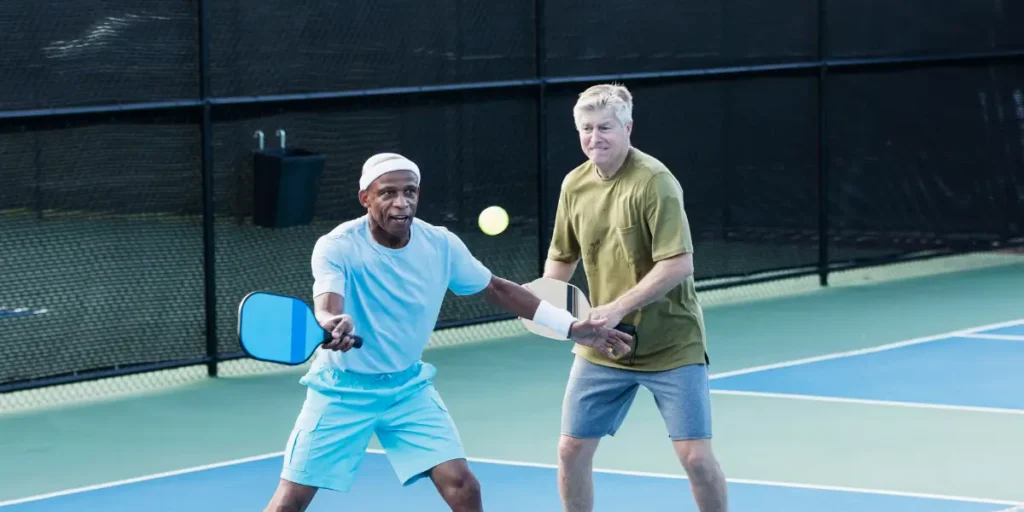
- Overusing the Wrist: When you rely too much on your wrist, your shots become inconsistent. Instead, use your elbow and shoulder for better control.
- Taking Big Swings: Volleys do not require large swings. When you swing too much, you lose accuracy. Always keep your strokes compact and controlled.
- Poor Footwork: Volleying involves more than just using your arms. You must move well and stay balanced. Light footwork helps you react faster and maintain stability.
- Standing Too Close to the NVZ: If you stand too close to the kitchen, your momentum may carry you inside after a volley. This results in a fault and costs you points.
Many players lose rallies because of these common mistakes.
Advanced Volley Strategies for Competitive Players
Skilled players use advanced volley strategies to gain an extra advantage during matches. When you understand these tactics, you can handle pressure situations more confidently.
When to Volley Aggressively vs. Defensively
You must choose between aggressive and defensive volleys based on the situation of the rally.
When you receive a high and easy ball, you should attack with an aggressive volley. This puts immediate pressure on your opponent.
However, when your opponent plays powerful shots and controls the rally, you should use defensive volleys. In this case, focus on blocking or resetting the point instead of attacking immediately.
Smart players analyze the rally and adjust their style accordingly.
How to Counter a Volley with a Drop Shot
You can use a drop shot to neutralize an opponent’s aggressive volley strategy.
Instead of returning the ball with the same power, play a soft shot and land it gently inside the non-volley zone.
This forces your opponent to move forward and reduces their ability to attack. As a result, you regain control of the rally.
Using ATP (Around The Post) Volleys in a Match
An ATP(Around The Post) volley is an advanced shot where you hit the ball around the net post instead of over the net.
You usually use this shot when your opponent plays a wide-angled shot and leaves the sideline open.
When you practice ATP volleys regularly, you can surprise your opponents and win difficult points. This technique can become a powerful weapon in competitive matches.
FAQs
A volley is a shot that you hit before the ball bounces, usually near the net.
A groundstroke is a shot that you play after the ball bounces, mostly from the baseline or midcourt.
No, you cannot volley a serve. According to the two-bounce rule, the serve must bounce once on the receiver’s side, and the return must also bounce before either team can volley.
In doubles, volleying helps teams control the net and pressure their opponents. Teams that exchange strong volleys usually dominate play near the non-volley zone and control the pace of the match.
Most players prefer the continental grip for volleys. This grip allows you to switch quickly between forehand and backhand shots without changing your hand position.
Yes, you can volley from behind the baseline, but players rarely do this. Volleys work best near the net. When you volley from far back, you usually lose court position and play weak returns.
Conclusion
Mastering volleys in pickleball gives you a strong competitive advantage. When you use punch volleys, dink volleys, drop shots, and roll volleys correctly, you control rallies and pressure your opponents.
By avoiding mistakes like momentum faults and poor positioning, you improve your consistency and confidence.
Regular practice, proper paddle control, and fast reflexes help you develop strong volley skills.
When you focus on these techniques and strategies, you turn volleys into one of the most powerful weapons in your game.