
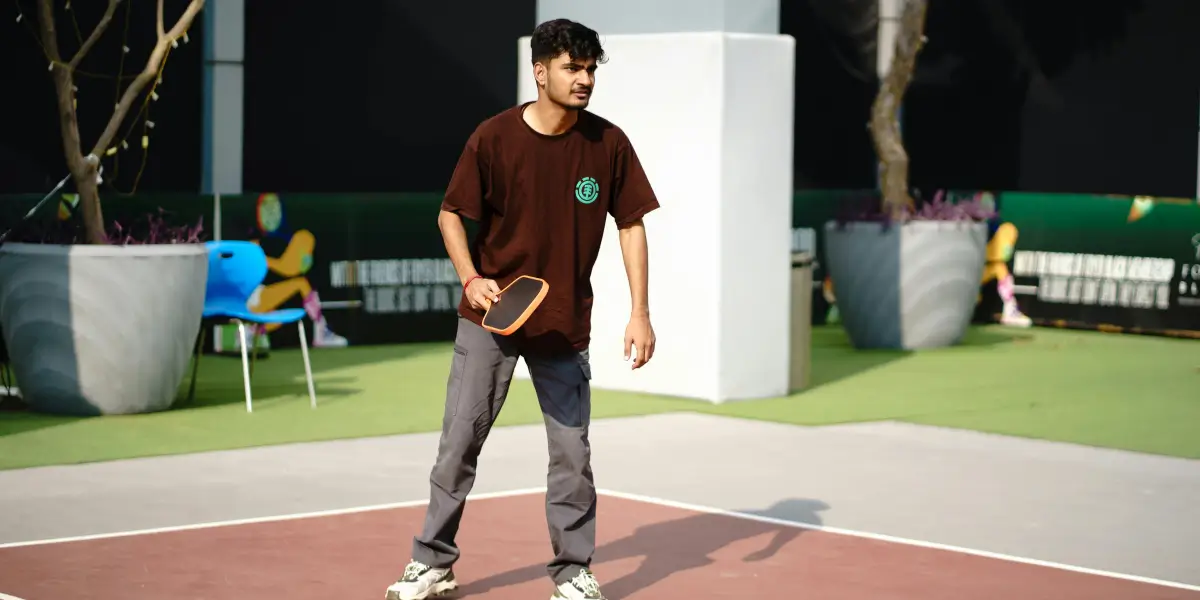
If you’ve ever chased down a fast lob or stretched for a high volley, you’ve probably wondered the same thing many players ask: Can you actually jump in pickleball without breaking a rule?
It’s a simple question, but the answer becomes surprisingly technical once you factor in the Non-Volley Zone, momentum rules, and what counts as a legal or illegal landing. Understanding these details is essential because one mistimed jump can turn a winning shot into an instant fault.
This guide breaks down the realities of jumping in pickleball, what’s allowed, what isn’t, and how skilled players use controlled jumps to gain an edge.
Can You Jump in Pickleball?
Yes, you can jump in pickleball, and the rulebook places no restrictions on simply leaving the ground. The real issue isn’t the jump itself but what happens when you land, especially if the shot you hit in the air was a volley.
According to official USAPA rules, a jump becomes illegal only when a player hits a volley and then lands anywhere inside the Non-Volley Zone, including the line. This landing triggers a kitchen fault, even if the contact point in the air was perfectly legal.
In simple terms, the jump is legal, the landing decides everything. Skilled players use this understanding to extend reach, create angle, and attack aggressively without violating NVZ rules.
Can You Jump Over the Kitchen Line?
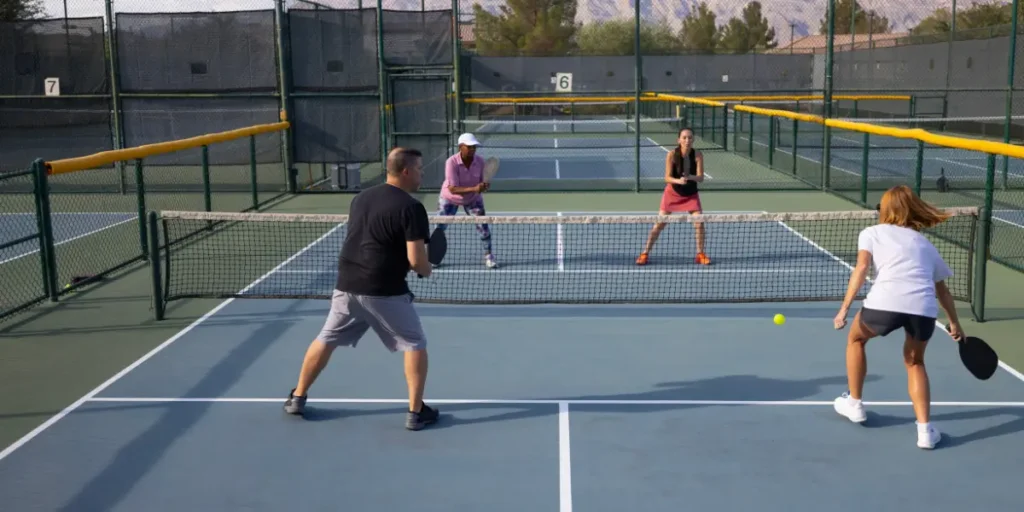
Jumping over the kitchen line is allowed, but only if your momentum does not carry you into the Non-Volley Zone after hitting a volley.
The rule focuses entirely on where your body lands or touches after contact. You can jump across the line, hover above it, or even clear it completely as long as you avoid landing in the NVZ when making a volley.
This is why experienced players often jump away from the kitchen, not toward it, to maintain full control of their momentum.
The moment your feet, paddle, clothing, or even sweat drops land or fall into the NVZ after a volley, the move becomes illegal. So yes, you can jump over the line, but you must land smart.
Can You Jump When Hitting a Volley?
You can jump during a volley, and in some situations, it’s even the only way to reach a high or wide ball. However, the legality depends entirely on your landing zone. If you hit a volley while airborne and land behind the kitchen line, the play is legal.
If your jump causes you to land inside the NVZ even milliseconds after contact, it’s a fault. This rule challenges players to control momentum, angle their jump away from the kitchen, and maintain balance so they don’t drift forward unintentionally.
Benefits of Jumping in Pickleball
Controlled jumping can significantly improve your performance by expanding your reach and allowing you to attack balls otherwise out of range. A well-timed jump gives you the height needed for aggressive overheads, sharper volley angles, and defensive saves on deep lobs.
Players also use quick “hop steps” to reset their balance, making transitions faster and reactions sharper. While full jumps are less common, the strategic micro-jumps used by advanced players often make the difference between winning and losing fast-paced exchanges near the kitchen.
How to Perform Powerful Jumps in Pickleball
Generating a strong, controlled jump in pickleball isn’t about height, it’s about explosive timing and safe landings. Since the court is small and the NVZ creates strict limits, your focus should be on compact power rather than dramatic leaps.

Start by keeping your stance slightly wider than shoulder-width, allowing your legs to load evenly before pushing upward. The power comes from a quick bend of the knees, a firm core, and a coordinated upward drive rather than a long wind-up. This compact motion helps you reach high volleys or aggressive overheads without losing balance.
A powerful jump also depends on where you land. Always angle your momentum backward or sideways when performing airborne volleys to avoid drifting toward the kitchen.
Skilled players direct their landing using their hips and shoulders, ensuring they remain behind the NVZ line even in high-speed points. Think of the jump as a controlled extension, not an all-out leap.
With practice, your jumps become both efficient and safe, allowing you to attack confidently while staying within the rules.
When You Should Avoid Jumping in Pickleball
Jumping can be effective, but there are specific moments when it works against you instead of helping. Avoid jumping in these situations.
- Near the Kitchen Line
Any jump close to the NVZ increases the risk of landing inside the kitchen after a volley. Even a slight forward drift can turn a good shot into an instant fault. - When You’re Off-Balance
If your weight is shifting or your stance isn’t stable, a jump will magnify the imbalance. This often results in awkward landings, mishits, or unnecessary errors. - During Fast Exchanges at the Net
Rapid volleys require quick foot adjustments, not vertical jumps. Leaving the ground removes your ability to react to sudden redirects or sharp angles. - On Slick or Uneven Surfaces
Outdoor courts with dust, moisture, or rough patches make jump landings risky. A slippery surface can easily lead to ankle rolls or knee strain. - When Your Body Is Fatigued
Tired legs lose control of momentum. What starts as a simple hop can end in a stumble, especially near boundary lines.
Avoiding jumps in these scenarios helps maintain control, reduces faults, and protects your joints during long play sessions.
Can You Jump Serve or Return in Pickleball?
Jumping during serves or returns is allowed, but it’s rare and must follow precise rules to remain legal. The key principle is foot placement: your feet must start behind the baseline, and any airborne motion cannot result in landing inside the Non-Volley Zone if contact is made near it.
While jump serves can add power and angle, most players stick to traditional serves to maintain consistency and control. Similarly, jumping to return a serve is situational, used mainly when the ball is deep or wide, and normal footwork isn’t enough to reach it safely.
Can You Jump During a Return of Serve?
Jumping to return a serve is legal, but should be done with caution. Focus on:
- Timing your jump so contact happens at the highest point of your reach.
- Landing behind the NVZ to avoid kitchen faults.
- Using your legs and core to control momentum and prevent forward drift.
This technique is usually reserved for advanced players who can predict serve placement and react instantly.
Can You Jump to Hit an Overhead Smash?
Jumping is often the most effective way to execute a high overhead smash. To do it correctly:
- Position yourself so that your take-off foot is stable.
- Swing the paddle at the peak of your jump for maximum power.
- Direct your landing away from the kitchen line to stay within legal boundaries.
- Use your core and shoulder rotation to maintain balance and reduce the risk of injury.
When performed correctly, jump smashes add speed, angle, and aggression to your shots while remaining entirely legal.
Common Mistakes Players Make When Jumping into Pickleball

Even experienced players can make errors when incorporating jumps into their game. One of the most frequent mistakes is jumping too close to the kitchen, which increases the likelihood of landing inside the Non-Volley Zone and committing a fault.
Another common issue is overextending, jumping too high or too far without control, which disrupts balance and reduces shot accuracy. Many players also fail to coordinate their paddle and body movement, resulting in weak or off-target volleys.
Additionally, underestimating court conditions, such as slick or uneven surfaces, can lead to slips, ankle twists, or other injuries. Being mindful of these pitfalls helps players use jumps effectively without unnecessary risks.
Pro Players Who Use Jump Shots
Top-level players use jumps with precision, focusing on quick, controlled hops rather than big leaps. Pros like Tyson McGuffin use these micro-jumps to reach high balls near the kitchen while staying balanced and avoiding faults.
Success comes from anticipation, body control, and court awareness, not sheer vertical power. Adopting this approach makes jump shots effective and safe for your own game.
FAQs
No. Jumping itself is allowed, but landing inside the Non-Volley Zone after hitting a volley is a fault. Always control your momentum to stay behind the line.
Yes. Momentum is key in determining legality. Even if contact is legal in the air, landing in the NVZ due to forward momentum results in a fault.
Beginners should focus on footwork and balance first. Controlled jumps can be introduced gradually to avoid faults and injuries.
Yes. Jumping or landing backward or sideways can prevent NVZ violations while still reaching high or wide shots.
Related Post
- Can You Spike in Pickleball
- Is Pickleball Always Doubles
- How to Become a Professional Pickleball Player
- How Long Does a Pickleball Game Last
- Can You Hit the Net on a Serve in Pickleball
Conclusion
Jumping in pickleball is both legal and strategic, but its effectiveness depends entirely on control, timing, and awareness of the Non-Volley Zone. A well-executed jump can extend reach, create powerful angles, and help you stay competitive in fast-paced rallies.
However, uncontrolled leaps or misjudged landings often lead to faults or injuries, especially near the kitchen line. By practicing controlled jumps, proper footwork, and core stability, players of all levels can incorporate jumping safely into their game.
Observing how pros use micro-jumps also provides valuable insights, showing that precision and anticipation matter far more than raw vertical power. Mastering this skill can elevate your pickleball performance while keeping you within the rules.