
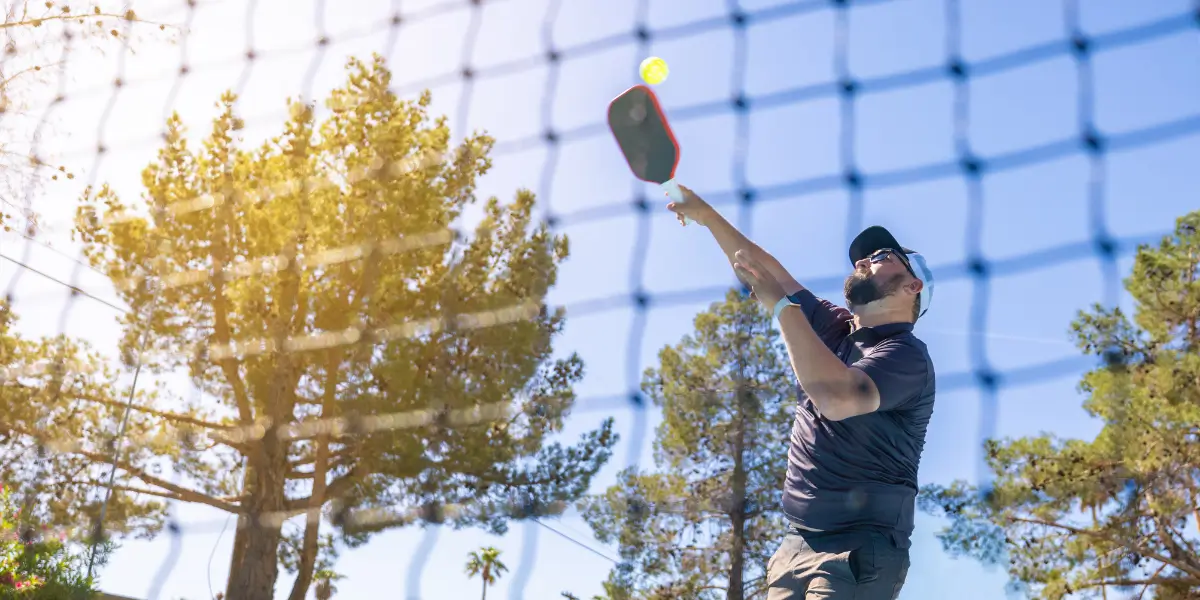
Overhand power feels natural for players who come from tennis or badminton, but pickleball uses a different serving rule. Many new players walk onto the court thinking they can hit the ball from above the shoulder and drive it hard into the service box.
That idea quickly leads to faults because an overhand serve is not allowed under official pickleball rules. The rulebook clearly requires an underhand motion, and referees enforce it at every competitive level.
By the end of this article, you will clearly understand why the overhand serve is illegal, what makes a serve legal, and how to hit a controlled serve that follows the rules while still putting pressure on your opponent.
Understanding Pickleball Serve Rules
What the Official Rules Say
The official serving standards come from USA Pickleball, which publishes and updates the rulebook used in sanctioned tournaments across the United States and many international events.
First, the serve must follow an underhand motion. The player must move the paddle in an upward arc and strike the ball below shoulder level. The motion cannot resemble a tennis-style overhead swing.
Second, the point of contact must be below the waist. The rulebook defines the waist as the navel area. If contact occurs above that point, the serve becomes illegal even if the motion looks mostly underhand.
Third, the paddle head must remain below the wrist at the moment of contact. This requirement prevents players from snapping the paddle over the ball in a downward chopping action. Officials often watch this detail closely during competitive matches.
Together, these three elements eliminate any possibility of a legal overhand serve.
Why Overhand Serves Are Not Allowed
Pickleball was designed to reward placement control and strategy rather than raw serving power.
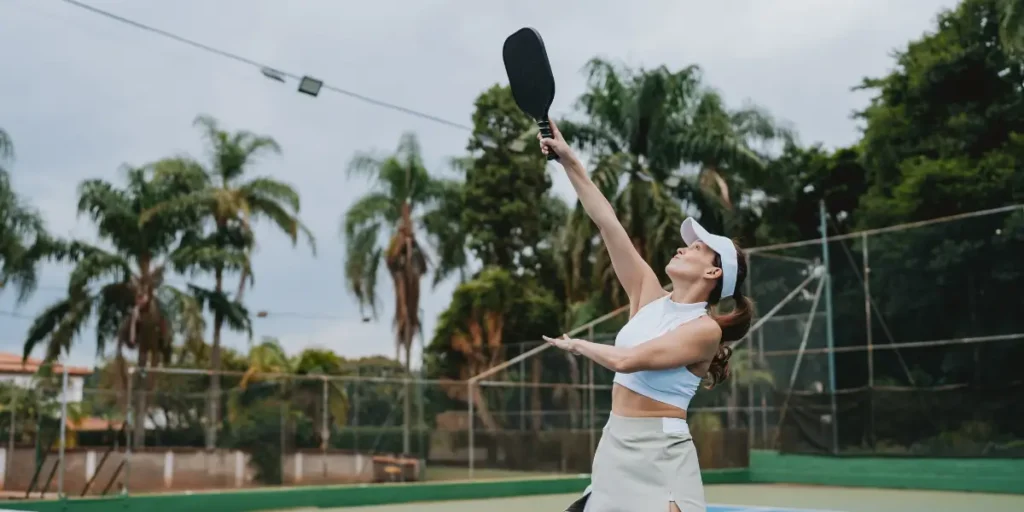
Allowing overhand serves would create a major imbalance, especially for beginners and older players. The underhand rule keeps the game accessible and reduces the dominance of strong athletic servers.
Safety also plays a role. An overhead serve encourages high velocity swings, which increase shoulder and elbow strain over time. The controlled underhand motion lowers injury risk and supports long-term participation.
By enforcing these limits, the sport protects competitive fairness and preserves its beginner-friendly structure while still allowing skilled players to develop spin placement and depth within a legal framework.
What Happens If You Serve Overhand in Pickleball
An overhand serve results in an immediate fault. Officials and opponents do not treat it as a minor technical error. They treat it as a direct violation of the serving motion requirements.
In a referee-led match, the official will call the fault the moment illegal contact occurs. The serving side either loses the rally or commits a side out in pickleball, depending on the format and score situation.
In recreational games without a referee, players are responsible for calling faults on their own. Because the motion is visually obvious, disagreements rarely continue for long.
What matters most is the legality of the motion at contact. Intent does not protect the server. Even if a player accidentally swings too high, the serve becomes illegal if it breaks the defined standards. Contact above the waist or a paddle position above the wrist immediately invalidates the serve.
Serious players remove uncertainty from their technique. They practice a clean upward swing and controlled contact point so no opponent can question the motion. One illegal serve at a tight score can shift pressure and change momentum quickly.
Types of Legal Serves in Pickleball
Pickleball allows two primary serving methods. Both follow clear technical standards, yet each offers a slightly different feel and level of control. Skilled players choose the method that fits their mechanics while staying fully compliant with the rulebook.
Traditional Underhand Serve
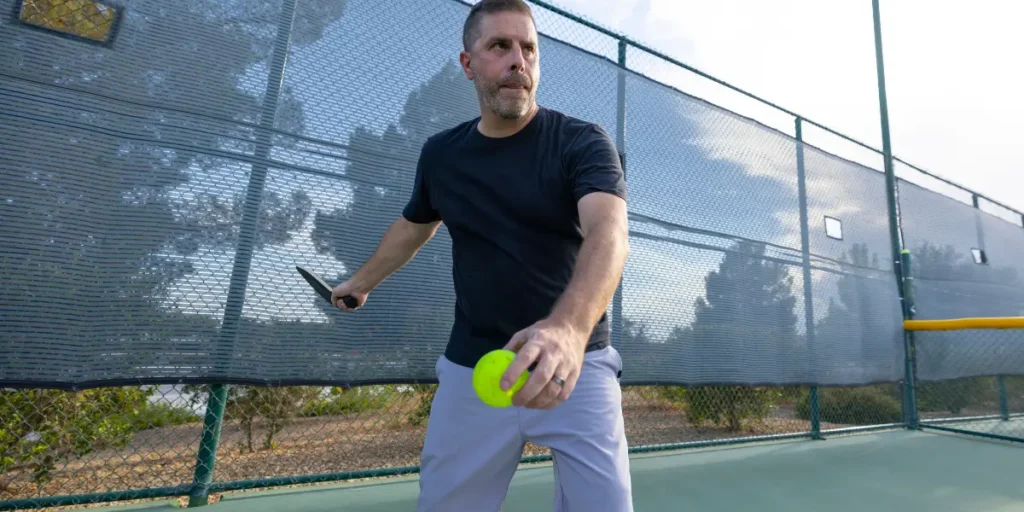
The traditional underhand serve remains the most widely used technique in competitive play. The server starts behind the baseline with at least one foot grounded outside the court. The motion begins with a controlled backswing followed by a smooth upward arc.
The paddle must travel upward at contact. The ball must be struck below the waist. The paddle head must stay below the wrist when the paddle meets the ball. When executed correctly, the motion looks fluid rather than forced.
Experienced players focus on depth and placement instead of raw speed. A deep serve that lands near the baseline pushes the returner back and creates a softer third shot opportunity. Consistency matters more than power. Players who master a repeatable underhand motion rarely struggle with serving faults.
Drop Serve Legal Alternative
Drop serve in Pickleball offers a different approach while remaining fully legal. In this method, the server drops the ball from any natural height and allows it to bounce before striking it. The player cannot toss or add force to the drop. Gravity alone must release the ball.
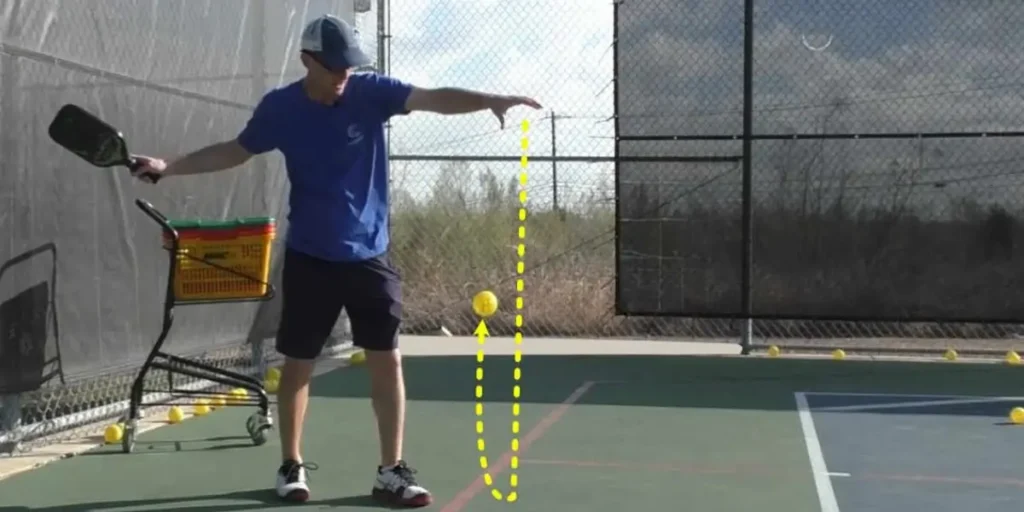
Unlike the traditional serve, the drop serve does not require the paddle to stay below the wrist at contact. The bounce naturally lowers the strike zone, which reduces technical errors for beginners. Many players who struggle with contact timing prefer this method because it simplifies mechanics.
Competitive players also use the drop serve strategically. It allows rhythm control and can produce reliable topspin without risking illegal contact.
Both serving styles meet official standards. The difference lies in comfort control and execution under pressure.
Common Serving Mistakes to Avoid in Pickleball
Contact Above the Waist
One of the most frequent violations occurs when players strike the ball too high. During fast rhythm practice, the ball often rises above the navel before contact.
At that point, the serve becomes illegal even if the motion feels underhand. Servers should control the drop and maintain a stable contact zone below the waist every time.
Incorrect Paddle Position
Many players attempt to create extra spin by snapping the wrist aggressively. This motion often lifts the paddle head above the wrist at contact. Officials monitor this detail closely in competitive matches. A relaxed upward swing with controlled wrist alignment keeps the serve legal and repeatable.
Foot Faults at the Baseline
Foot placement matters just as much as paddle motion. The server must keep at least one foot behind the baseline and outside the imaginary extensions of the sideline and centerline. Stepping on the line at contact results in an automatic fault even if the serve lands perfectly.
Choosing Power Over Placement
New players often chase speed instead of depth. A hard serve that lands short gives the returner time and positioning.
A deep controlled serve pushes the opponent back and sets up the next shot. Smart players build consistency first, then introduce spin and variation once their mechanics remain stable under pressure.
Can You Smash or Hit Overhand at Other Times?
An overhand motion becomes completely legal once the serve has been struck correctly and the rally begins. The limitation applies only to the starting shot of the point. After that, players can swing above the shoulder without any serving restriction.
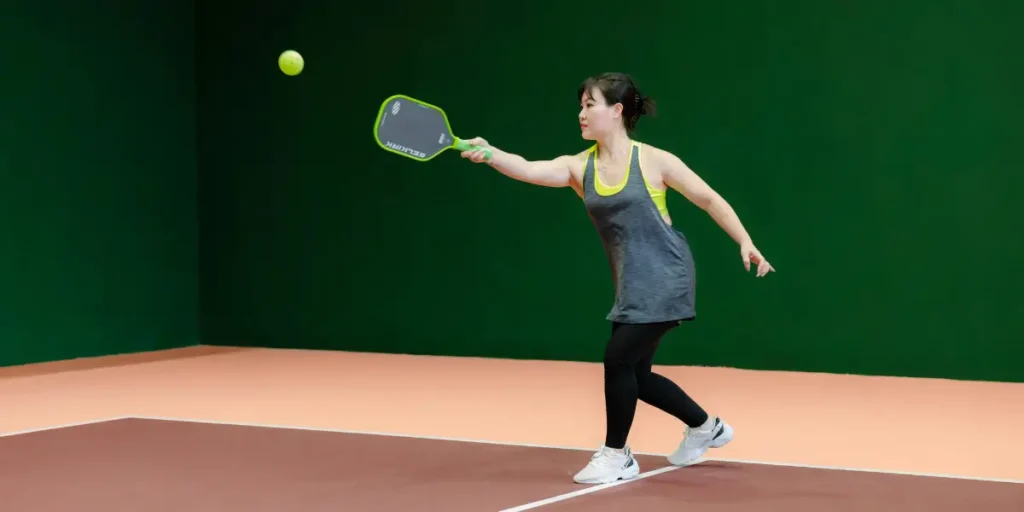
The overhead smash is the clearest example. When an opponent lifts the ball high with a defensive lob, a prepared player moves under it, sets a balanced stance, and drives the ball downward with full extension. This attacking shot often ends the rally immediately.
Difference Between a Serve and a Rally Shot
A serve must follow strict mechanical rules at the moment the point begins. Contact must stay below the waist, and the paddle must travel in an upward motion.
A rally shot takes place after the ball is already in play. Once the return of serve crosses the net, players can strike overhead with natural acceleration and full extension without breaking any serving rules.
Beginner Tips for a Strong and Legal Serve in Pickleball
A strong serve in pickleball does not rely on raw power. It depends on repeatable mechanics and smart placement. Beginners who focus on control from the start build confidence faster and avoid unnecessary faults.
Start with a stable stance behind the baseline. Keep your weight balanced and your swing compact. A smooth upward motion creates cleaner contact than a rushed backswing. When your movement stays controlled, your contact point remains below the waist without forcing adjustment at the last second.
Focus on depth before spin. A serve that lands deep near the baseline pushes your opponent backward and limits their attacking options. Short serves give the returner time to step in and control the rally. Consistent depth creates immediate pressure even without heavy pace.
Develop a reliable routine before each serve. Bounce the ball once or take a steady breath before starting your motion. This small habit improves timing and reduces tension during important points. Players who rush their serve often lose rhythm and commit avoidable errors.
Once your motion feels consistent, begin adding light topspin. Controlled spin keeps the ball dipping into the service box while maintaining legality. Build technique step by step, and your serve will become an asset rather than a liability.
FAQs
Yes, you can leave the ground during the motion. However, at least one foot must remain behind the baseline at the moment of contact. If both feet land on or inside the baseline when the paddle strikes the ball, the serve becomes a fault.
Yes, spin is legal as long as the serving motion follows official requirements. In a traditional serve, the paddle must move in an upward arc, and contact must occur below the waist. The paddle head must remain below the wrist at contact. If wrist action causes the paddle head to rise above the wrist, the serve can be ruled illegal.
A sidearm motion can be legal if it still travels in an upward path at contact and meets all serve height requirements. The swing cannot turn into a downward or high lateral strike. The motion must clearly follow underhand serving standards.
No competitive rule set has allowed a full overhand serve. The underhand requirement has always existed to maintain balance, accessibility, and fairness at the start of each rally.
Conclusion
An overhand serve is not legal in pickleball, and the rule leaves no room for interpretation.
The serve must follow an underhand motion with contact below the waist and proper paddle positioning at the moment of impact. Any swing that resembles a tennis-style overhead action results in a fault.
This restriction does not limit offensive play. It simply regulates how the point begins. Once the rally starts, players can attack high balls with full overhand power and finish points with strong overhead smashes.
The structure keeps the serve controlled while allowing aggressive shot-making during live play.
Players who commit to clean mechanics gain a clear advantage. A deep, consistent legal serve sets up stronger third shots and keeps pressure on the returner. Mastering the fundamentals removes doubt, prevents avoidable faults, and builds confidence at every level of play.